Another feature of... |
|
Another feature of... |
|
The annual presentation of the Academy Awards approaches. So what could be more timely than to examine The Oscar, one of Hollywood’s greatest fiascoes? Someone should write a book about the numerous films that Hollywood has made about itself, and how they reflect the town’s various psychoses. First of all, the fact that Hollywood has made so many movies about itself reflects the town’s general narcissism. Second, you can’t help but notice how many of these pictures are ‘exposés’ of Hollywood. This betokens not only the film community’s genuine self-loathing, but also the self-regard of its individual constituents. After all, if you’re exposing the dark side of the industry, well, then obviously you’re not really part of that dark side. Finally, there’s the unavoidable fact that the vast majority of these exposés are hilariously awful. This suggests that, even when filmmakers decide to ‘attack’ Hollywood, they can’t really bring themselves to confront the business as it really exists. For every The Player, Hollywood has churned out five pictures like The Lonely Lady, The Carpetbaggers, Star, The Legend of Lylah Clare and, of course, The Oscar. I’d also like to take this opportunity to examine the importance of video boxes to the seasoned Bad Movie buff. Let’s say you’re surfing the shelves of your local video emporium, looking for that perfect cinematic turkey that’ll make your evening complete. Tired of your dependable yet predictable bad horror, sci-fi and action flicks, you wander into the "Drama" section, hoping for something with a little more meat to it. You spot the box for The Oscar. You know you’ve heard of it, but was it supposed to be the kind of hardcore garbage you’re presently seeking? Will the teenage clerk at the counter, extolling the virtues of Pauly Shore to a somewhat frightened looking patron, be a reliable source of info? Probably not. But have no fear: for the expert Bad Movie hound, the video box provides untold scads of information. Let’s start with the front of the box. There’s the standard large photo and title up at the top. But underneath that, the truth starts revealing itself. As a general rule, for instance, when the box mentions that the film is "FEATURING AN ALL STAR CAST", followed by three picture boxes highlighting the actors Tony Bennett, Jill St. John and Milton Berle, well, the saliva should start a’flowin’. And underneath those featured names, there’s a list of more ‘stars’: Ernest Borgnine (definite Bad Movie™ Bonus Points there!); Eleanor Parker (?); Stephen Boyd; Elke Sommer (aside from the instant reaction to seeing Elke Sommer’s name, I should note that she and Stephen Boyd are in fact the stars of the film. When the lead actors’ names are buried in order to highlight Milton Berle, and in a drama no less, you know something went seriously wrong); and Joseph Cotten. Knowledgeable Bad Movie fans maintain a tender spot in their hearts for turkeys featuring Joseph Cotten. That’s because Cotten is one of those actors who truly bestrode the Cinema Bell Curve™ (as postulated by yours truly) like a Colossus. Cotten starred in such truly great films as The Magnificent Ambersons, Alfred Hitchcock’s Shadow of a Doubt, The Third Man, and, of course, Citizen Kane. Yet later he was forced to appear in such awful trash as The Oscar, Lady Frankenstein, White Comanche and Latitude Zero. Few actors have gone so high, nor sunk so low. To have done both, well, Sir, my hat’s off to you. (Actually, of course, the proper response to this is horror that a talent of Cotten’s stature was forced to appear in such crap in order to find work. Obviously, there are things seriously wrong in the film business.) Now let’s turn to the back of the box. The clues here are subtler, but still revealing to the experienced eye. First, there’s the stale, utterly predictable usage of stage terminology in the plot description: "Turn off the spotlights, step backstage…" Then the film has the audacity to say that it reveals, "the real world that lurks behind the glamour of Hollywood." Yeah, babe, you’re a veritable documentary. After running through the cast again, the notes suggest that this laughable roster of second bananas, has-beens and never-wases "make this production a star-studded event." And then the notes have the gall to mention that the appearance here of Tony Bennett represents "his only theatrical film role". Like that’s a good thing! I mean, when you think about it, what they’re probably saying is that after appearing here he was never offered acting work again. (And believe me, anyone who’s seen him in this will have no trouble buying that theory.) Next the notes identify the main character as one "Frankie Fane". What the hell kind of name is that? We’re told that a couple of back stabs gets him an Oscar® nomination, "but the past has a way of catching up and screendom’s greatest star is about to take a fall!" What, it wasn’t good enough to describe the guy as a "major star", or "one of Hollywood’s brightest"? No, he’s got to be "screendom’s greatest star". Needless to say, even in this movie’s twisted reality, Frankie Fane isn’t that big. But I guess it’s supposed to be more exciting that way. Now the commentary start getting desperate, noting that the film’s gowns were designed by Edith Head; the musical score was by Percy Faith; the screenplay by Harlan Ellison (Harlan Ellison!! Bwahahaha!!) and Clarence Green, the director was Russell Rouse (who?). I imagine that your eyes glazed over while reading that list. So you can imagine out how lame it is that they would try to get a normal person (i.e., someone not looking for a Bad Movie) interested in the film with such stuff. Finally, of course, the film must be described as "a Hollywood classic." Yeah, it’s a classic, all right, though perhaps not in the way that they meant. The opening of our feature induces a strong sensation of déjà vu. This is because it’s the opening that The Lonely Lady wanted to have. As you remember (if you don’t, see my review elsewhere), The Lonely Lady was also supposed to open at the Oscars. Only for that movie, they couldn’t get the Academy of Motion Picture Arts and Sciences’ permission to use the name and image of the actual Oscar. So they created a lame duplicate imaginatively called "The Awards." (Man, where do they get their ideas?) I think one could safely posit that the reason The Lonely Lady couldn’t get permission to use the Oscar is because the Academy got so horribly burned by this movie. One has to imagine that industry wags of the time were pretty busy working this flick over. Here's a movie literally built around the Oscar, the very symbol of Hollywood’s greatest artistic aspirations and achievements (supposedly). So inevitably the film turns out to be a laughable debacle. One can imagine that, in the beginning, the filmmakers foresaw their film being nominated for, perhaps even winning, an Oscar itself. What a perfect act of cross promotion. ("And the Award for Best Picture of the Year goes to…The Oscar!") This wouldn’t even have required the film to be very good. After all, lame-o flicks like Cleopatra, The Towering Inferno and Dr. Doolittle have been nominated for Best Picture (!). Still, it’s only too easy to imagine how these dreams plummeted to the ground like the Hindenburg when they eventually saw the finished product.
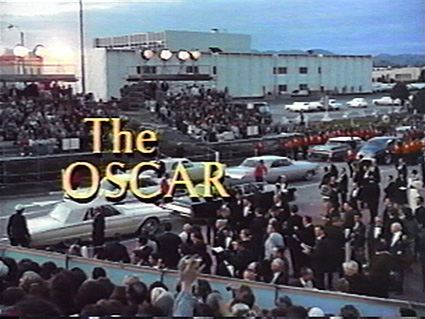
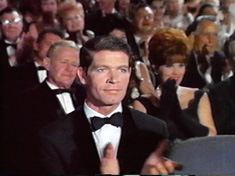
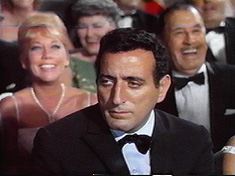
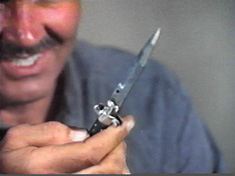
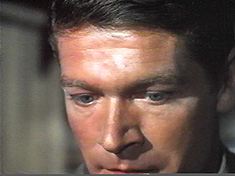
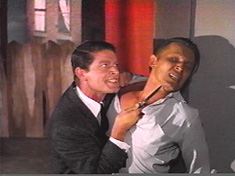
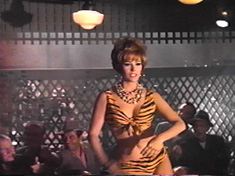
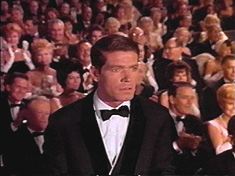
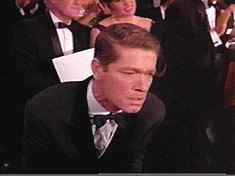
So we open outside the Dorothy Chandler Pavilion, home of the Academy Awards. Actual footage of arriving limos and thronged crowds is used, with the cars dating the film to roughly the mid-sixties. The musical score proves to be a rather unimaginative and self-important riff on "Hurry for Hollywood," our first indication that creativeness won’t be the order of the day. Then the bewilderment begins. How is one supposed to react to the superimposed words The Oscar followed by credits reading "starring / Stephen Boyd / Elke Sommer / Milton Berle"…? (Elke Sommer?!) "Introducing TONY BENNETT as HYMIE KELLY" doesn’t help. Although the credit assigning co-responsibility for the script to author and professional curmudgeon Harlan Ellison is sure to provoke a laugh from those familiar with him. Then the Academy receives a particular kick in the groin. A special credit notes that the distinctive statuettes appear in the film courtesy of the Academy of Motion Picture Arts and Sciences. Again, one could see how that august body decided to refuse such permission to other films in the future. As the credits come to a finish, we see our anti-hero main character Frankie Fane exit a limo. The crowd explodes into applause and fannish shrieks. No doubt they were told that someday the actor playing Fane, Mr. Stephen Boyd, would himself be a real life movie star. So much for that prediction. Fane, up for Best Actor (of course), gets stopped for the inevitable sidewalk interview. We learn that Frankie is the odds-on favorite to win. Asked about this, Fane responds with the usual cliches that we’ve come to expect from nominees. Finally, the ceremony begins, with the introduction of Bob Hope. Hope was in fact the regular host of the Oscars at the time this film was made. Hope doles out a few extremely weak introductory gags, showing that he had no intention of wasting actual "A" material on this ersatz ceremony. Of course, the audience reacts with outlandish hilarity to his weak japes. We see Fane in the audience, an empty chair prominent beside him. This is our first clue that he’s such a louse that he couldn’t even get anyone to attend the Oscars with him. Of course, in real life, any empty seats would be filled by tuxedoed and gowned extras. This is done so that the TV cameras don’t come across any audience bald spots. Then we cut over to Hymie Kelly (oh, brother!), also in the audience and glaring at Fane. One look at ‘actor’ Bennett playing Kelly and the hair begins rising off your neck. When an actor looks utterly fake while just staring at another character, you know you’re in trouble. This is more than confirmed when we go to a laughable close-up of Kelly. He remains as facially immobile as a wooden Indian during the entire sequence, creating the illusion that he has been inadvertently replaced by a waxen bust. He stays still so long that when he finally blinks, it’s shocking, like if the Lincoln Memorial suddenly asked you the time. Now the film’s excruciating narration begins. Yep, ol’ Hymie is going to tell us this tale through voiceovers. And by way of some of the worst written and most ineptly delivered narration in cinema history. Bennett, obviously nervous about his lines, reads through them way too quickly, lending odd inflections to his thick Brooklyn accent. From Hymie’s mental speech (which description can be read multiple ways, all accurate), we learn that Fane is a major league creep, and that he’s stepped on a lot of bodies to get here tonight (see IMMORTAL DIALOG). This leads us into the inevitable flashback (just like in The Lonely Lady!), presaged with the classic ‘wavy, blurry image’ technique. When the film clears, we’re (black) magically back in the past. We’re in a sleazy hole of a bar, and Frankie is getting the crowd riled up to watch Laurel (Jill St. John), his girlfriend/stripper. We can tell from Laurel’s face that she’s not happy with her current line of work. This is so that we don’t ‘judge’ her harshly. According to Hymie’s narration, this was the trio’s golden era. In spite of all the troubles the three of them had, they were a team. Frankie is giving the oddly large group of rummies a dementedly elaborate prolog to Laurel’s act, as if getting drunken men excited about watching women take their clothes off was some kind of a chore. This is meant to show that Frankie’s a natural performer, brimming with raw charisma. Had they elected to hire an authentically talented actor to play Frankie, this might have come across better (although that would still have left the script as is, so perhaps not). This scene also sets up the main characters in stark (the less generous might say two-dimensional) terms. Frankie is a charismatic but amoral cur, so ethically dead that he doesn’t see anything wrong with using his lover in a strip act. We can also see how he loves his ability to influence others. Meanwhile, Laurel and Hymie are his followers, drawn to him and giving him their trust whether he deserves it or not. This is subtly communicated (like a blow to the head with a brick is subtly communicated) by Laurel’s dissatisfied offstage looks. She obviously isn’t happy with her role, but is willing to go along with it if Frankie says she should. Hymie, meanwhile, is the otherwise friendless schlub who worships Frankie mainly because Frankie lets him hang out with him. Laurel comes out of the wings and starts her act. Accompaniment is provided by a record, an oddly lighthearted tune that sounds like strip music from a Gilligan’s Island episode. Laurel is adorned in an orange, tiger-striped outfit consisting of halter, skirt, stockings and gloves, which feature ersatz claws. She begins by vibrating like a milkshake maker, and then starts with a little cha-cha stuff. Also, much like the Catwoman dancer from Orgy of the Dead, she makes little slashing motions with her ‘claws’. Swaying her hips back and forth, she allows members of the audience to peel off her gloves. (How does she get them back? It not like she can go to Kmart and just pick up another pair). What I’m trying to get across here is that this ‘strip’ act is really, really boring. And given the time period in which the film was made, we know that we won’t be seeing all that much either. Sure enough, while Laurel continues to strip (and continues to throw her entire costume out into the audience), the camera moves in such a way that we never get to actually see anything. While Frankie can be seen enjoying the show, Hymie wears a notable scowl on his face. This is our first indication that he’s more sensitive to Laurel’s feelings than Frankie is. Pulling Frankie away, the two go into the manager’s office to get their split. However, the guy rips them off. He tells them that his partner is the local sheriff, so they better just take what he’s given them and go. Frankie goes for the guy (after calling him a "fat honey dripper"), who pulls a switchblade out of his desk. This is shot for maximum laughs (unintentionally, we assume). First the camera zooms in on the blade, then we cut to an extreme close-up of Frankie’s worried face, accompanied by a ‘waaaaa’ musical cue. The guy shadows Frankie with the knife, while laughing and repeating, "Pretty, pretty!" (Don’t try to understand it, just go with it.) In a scene that I’m certain is somehow symbolic, Frankie picks up a garbage receptacle and uses it as a shield. Proving that the waste paper basket is mightier than the sword, Frankie soon disarms his opponent and starts whomping on him. Taking only their fair share of the loot (this is before Frankie has achieved full heel-dom), they take off.
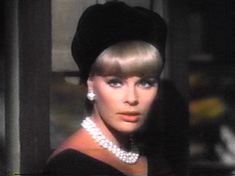
Next we see our intrepid threesome sitting in a mock car, featuring worse than usual backscreen ‘window’ effects. Sirens are soon heard, and Hymie shouts, "Uh oh, here it comes," leading one to believe that they’re being pursued by the Movie Police. Luckily for them, though, it’s only the corrupt Sheriff. As the inappropriately jaunty jazz score continues to play, they get pulled over. The Sheriff (an embarrassing cameo by Oscar winning actor Broderick Crawford) slugs Frankie, and we next see them in jail. They learn that they’ve been arrested on charges of prostitution and procuring. The Sheriff also proves to be a bigot, asking the ‘obviously’ Jewish Hymie how he got the ‘Kelly’ portion of his name. (Well, you knew with a name that ridiculous they were going to bring it up.) This is Bennett’s big ‘dramatic’ speech ("Best Supporting Actor, here I come!"), as he defiantly explains that his father was Irish and his mother was Jewish. Of course, that still fails to explain why his folks stuck him with such an awful moniker. What, Jacob Kelly, for instance, wouldn’t do? Frankie starts lipping off. The Sheriff slaps him around a bit, daring him to start something. "Now, if you’re looking for a bruise," the Sheriff taunts, the jazz score resuming, "keep scratching!" Laurel comes out yelling at Frankie, sarcastically referring to him as "friend Fane!" "Cool it!" Hymie cautions her. The Sheriff informs them that a $300 ‘bond’ will get them back on the road. As he’s already stolen their cash, Frankie replies that they’ll have to sell Laurel’s car. She is less then pleased with this suggestion, causing Frankie to reply, "This isn’t a game of Potsie, Laurel! He’s going to keep us here until we grow webbed feet!" The Sheriff, eating his way through a half gallon of vanilla ice cream, happily nods in agreement. The car is soon sold, and the gang promptly jumps bail. They head to New York by ‘busting thumb," a term for hitchhiking that I’m sure hasn’t been used before or since it’s utterance here. Next up on our Cameo Parade of Humiliation is Oscar winner Ed Begley, Sr., playing the owner of a New York strip club. He offers to hire Laurel, but doesn’t need a ‘spieler,’ Frankie’s specialty. Frankie tells him to buzz off, starting another of the film’s weirdly written yelling matches. "You’ve got a glass head," Frankie tells the guy, "I can see right through it!" He storms out, but Laurel, knowing that they need the money, accepts the job. Back at their room, this causes dissention. Laurel suggests that Frankie find work, pissing him off no end. He grabs her arm roughly, and she gasps. "You hurt me, Frankie!" "Send me a bill," he snarls back. He stalks out into the apartment’s living room, where Hymie’s straitening his tie. Laurel leaves for work in a huff. Hymie mentions that he’s heading out for a "swinging party in the Village. Lots of chicks." Frankie, feeling pressured by his relationship with Laurel, decides to tag along. The party is a hep affair indeed: Lots of cool cats squeezed into a smoke filled room with the inevitable jazz combo in the corner. "Man, what a scene," the gleeful Hymie notes, "Forget it!" Hymie heads over to the chili/spaghetti buffet, while Frankie scopes out the chicks. He soon spots Kay (Elke Sommer) sitting alone in a corner and heads over. Their mutual attraction is obvious. "Are you a tourist or a native?" he suavely asks. "Take one from column A and two from column B," she replies, "you get an egg roll either way." Well, that answers that. For those who don’t know much about Ms. Sommer, she was one of those buxom, thickly accented Europeans with which Hollywood was briefly infatuated, like the Gabor sisters, Gina Lollobrigida or Anita Ekberg. Frankie comes on to her, but she doesn’t go along. "I’m not the kind of voman who uses sex as a release," she explains, "or even as a weapon." "Do you always talk like that?" Frankie asks. Viewers, reeling from the combination of her elliptical dialog and halting speech patterns, might well ask the same. Somewhere in the tangle of their continuing ‘hip’ dialog, we learn that she’s a virgin. This only reinforces our impression that she’ll eventually be used and tossed away by our dissolute anti-hero (that and her second billing in the credits). The couple’s often incomprehensibly with-it discussion waxes on, until Frankie finally utters a line sure to bring a painful nod of agreement from the audience: "You’re making my head hurt with all that poetry!" Frankie returns late to the apartment to find Laurel and Hymie waiting for him. Laurel bawls him out. She’s tired of working to support him, only to have him run around after other women. Frankie, chaffing at her constant complaints, tells her off. Hymie jumps in, pointing out that Laurel’s demands are pretty reasonable. "Everybody’s got the knife out tonight," Frankie snarls, "right, Kemo Sabe?" Laurel gets fed up and kicks him out. She tells Hymie that no one, not even Frankie, is going to treat her like some slut. Hymie then begins a hilarious example of elementary Freud as interpreted by Hollywood scriptwriters. It turns out that Frankie’s mother was always sleeping around. Frankie tried to get his father to leave her, but he wouldn’t. Finally, he took his father over to his mother’s current lover’s place. Confronted with the truth, his Father killed himself. Frankie blamed himself and now has the obvious, connect the dots problems with women. Gee, now that I understand what makes Frankie tick, it makes him almost, well, two-dimensional. We learn that Laurel was originally Hymie’s girl. He stood aside and let Frankie take her away from him because he knew Laurel preferred it that way. But he warns her that Frankie won’t be coming back. As the obligatory Lush Soap Opera music swells in the background, Laurel drops her bombshell: she’s pregnant with Frankie’s child. Meanwhile, we catch Frankie doing grunt work. Kay’s gotten him a stockroom job at the fashion studio where she’s a designer. While working, Frankie hears some hotshot hitting on Kay. The guy tells her that’s she wasting her time on Frankie, that he’s a nothing. Frankie waits until Kay leaves and then belts the guy one. To ‘comical’ music, his victim bends over and runs into the bathroom to throw up. Har har! Frankie meets up with Kay after work, but she’s hosed off. The guy finked on Frankie, and Kay had to work overtime to keep him from being fired. She mentions that she has costumes to deliver to the theater, and an intrigued Frankie asks if he can tag along. She refuses, but he grabs the costumes, not taking 'no' for an answer. At the theater we see the rehearsal of some sort of social drama. Up on stage, a knife-fight is being choreographed. Frankie, feeling that the knife-fight lacks authenticity, begins heckling the actors (of course, the fight has been purposely arranged by the filmmakers to look awkward so that Frankie can mock it). This earns him the glaring disapproval of the rehearsal’s only other viewer, the middle aged Miss Sophie Cantaro. Finally, the director is forced to halt the rehearsal. He asks Frankie what his problem is. Then one of the actors calls Frankie a creep. Frankie immediately runs up on stage, grabs the other actor’s knife, and shows the guy how to handle a blade. (We’re supposed to believe that actual, razor-sharp stilettos are being used on stage.) As soon as he corners his whimpering opponent, Frankie laughs and flicks the knife down, embedding it point first in the floor. No wimpy retractable or rubber blades for this bunch! The director calls him a lunatic, but Sophie looks at the Frankie thoughtfully as he and Kay leave the theater. We catch up with our lovebirds at a resturant. Kay lashes out at Frankie over his behavior. "Sometimes I get the feeling, Frankie, you ought to be chained up with a ring in your nose!" she says. Whatever that means. Sophie Cantaro enters and heads over to their table. (How did she find out where they were going for dinner?!) Frankie expects that she’s come to lecture him, too. Instead, she reveals that she was impressed by his style on stage. Kay informs Frankie that Sophie is from Hollywood. "Swing it. And I’m from Ohio," he sneers, "How many Greenstamps is that?" Sophie apparently finds that droll, laughing at his ‘wit’. Sophie discloses that she’s searching out fresh talent for her studio. Frankie continues to act (and rather poorly at that) like a two year old. Kay rebukes him, resulting in another tantrum. "Will you stop beating on my ears! I’ve had it up to here with all this bring-down!" he growls. "I’m me! If you don’t like what you see, then change the scenery!" Although I‘d imagine that it’s hard to change the scenery while actor Boyd is so busy chewing on it. Kay leaves, and Frankie has an introspective (and extraordinarily hammy) moment. "Why do I always try to destroy the people I love?!" he wails. Then he slumps down over the table. Sophie reaches over to console him, but Frankie looks up with a gleam in his eye. He’d been ‘acting’ to impress her. Sophie, obviously an acolyte of the William Shatner school of Method Acting, is wowed by this thespian display.
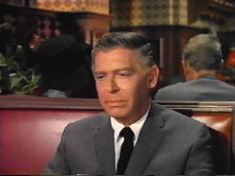
Word gets around that Frankie’s trying the acting thing. Hymie tells how he and Laurel secretly went to an off-Broadway play he was in to watch. "He was good," Hymie states, revealing a severe lack of promise as a drama critic. We see Frankie give one line and the audience applauds. (Is applauding standard behavior when watching a play?) At Sophie’s apartment, we see her entering with "Kappy’ Kappstetter (Milton Berle). (Was there a contest among the screenwriters to see who could come up with the most retarded character name?) Kappy’s a big agent in Hollywood, and Sophie wants him to take Frankie on as a client. Sophie tells him that it’s important that Frankie be her discovery. "Is it possible that it’s too important?" he asks, triggering a ‘thoughtful’ look and a sudden ‘dramatic’ swell of the musical score. Kappy also asks if she’s sleeping with Frankie, a question she dodges. Still, Kappy takes him on as a client as a favor to Sophie. Airplane stock footage heralds the trip out to Hollywood. We cut to the gates of the lamely named Galaxy Pictures, the studio Sophie works for. Frankie ends up in the waiting room of Kenneth Regan, the head of the studio (Joseph Cotten). From the connected main office, he can hear Kappy and Sophie arguing his case. Regan initially ignores them, dictating to his secretary: "Note to the Budget Department. I have not yet received the cost breakdown sheets for the second unit in Rome. I want those figures immediately." These jargon littered lines are apparently meant to lend the scene ‘verisimilitude’. Maybe next he’ll note that, "Hix pik hit flix." An inane conversation ensues (see IMMORTAL DIALOG), as Regan resists hiring Frankie. He feels that he lacks something (uh, talent?). Still, he bows to their pressure and offers Frankie a contract. Of course Frankie is annoyed at having to listen while others decide his fate. He walks in and grabs Regan’s hand, making with an impertinent quip while he’s at it. When next we catch up with Frankie, Hymie has rejoined him. Alone in La-La land, Frankie needed his old sidekick, and Hymie answered the call. Frankie ushers Hymie into his Hollywood apartment, past the obligatory swimming pool and a comical display of dozens of nubile young sunbathing chicks. As Hymie’s unpacking, Frankie asks him about Laurel. It turns out that Hymie married her, but that she has since passed away. Frankie stifles his shocked reaction and leaves the room with a jocular quip, angering Hymie. We then cut to a mansion. A tuxedoed Frankie arrives for an arranged date with a gorgeous blond mid-level star, Cheryl Barker. In a ‘comic’ bit, he’s greeted at the door by a surly fat maid who snarls, "You’re late!" Barker comes down and lays out the ground rules. First, their date has been arranged by the studio purely as a publicity measure, so he can lay off the charm. Also, as she’s higher up the Hollywood ladder than he is, she expects him to stay out of her spotlight. He’s just along for the ride, there to suck up a wee bit of her glory. Seeing her dress in a photo (she had Fane take one just now), she groans and runs back up to change. When she finally comes back down, she’s exchanged her black dress and mink stole for an identical white dress and mink stole, then hands him the camera again. She continues on with the rules. Of course, Frankie can barely manage to suppress his resentment at this offhand treatment. Oh, and in case you don’t ‘get’ it, this scene is supposed to be funny. The couple arrives at a swanky premiere. Barker immediately begins hamming it up for the press in a, yawn, ‘comical’ fashion. Ha ha, Hollywood is such a shallow place. Improbably, the reporters keep asking about who Fane is, while Barker bubbles on about being asked to do a picture with Jack Lemmon. We, of course, who are in on the ‘joke’, know that she’s just blowing steam. Exasperated, Frankie finally makes a crack at her expense to the appreciative press. Barker responds by smacking him with her purse, resulting in the inevitable "BARKER WORSE THAN BITE" headline. Of course, puns like that are why no studio would allow a prospective star to use that name. And, oddly, the newspaper photo of Frankie getting smacked doesn’t match the actual footage of him getting smacked. Apparently, she later agreed to reproduce the event for photographers. (Yeah, that’s the ticket.) Anyway, this is just the start of Frankie’s winning streak. Hymie narrates his climb, which takes place over the next couple of years. Fane’s becoming a bigger and bigger star. Yet he always spends beyond his means, and has become addicted to "the wildest narcotic known to mortal man: success." And Hymie is always at his side, although we see that he’s still ultimately Frankie’s lackey. Frankie’s also gotten a comic relief valet, Sam. He’s played by Jack Soo, who starred as Det. Yamana on the old Barney Miller TV show. Fane’s in a foul temper, and his two underlings commiserate. "He’s in a funky mood today," Sam warns. "You know the pattern," Hymie replies, "every time he starts a new picture: Snarling Fane, the boy-faced dog!" (That’s supposed to be funny.) Sam answers the phone. It’s Cheryl Barker. Now that Fane’s a big star, she’s suddenly more appreciative. Of course, Frankie’s now in the position to blow her off. Frankie and Hymie head over to Kenneth Regan’s office. Driving around the studio backlot, Frankie suddenly pulls his Rolls over. He’s spotted Kay. She’s been brought out to Hollywood to work as a sketch artist under Edith Head, now the subject of her own embarrassing cameo appearance. For those who don’t recognize the name, Edith Head was the greatest and most renowned costume designer in Hollywood, with a career that spanned decades. Too bad one of her few appearances in a film was in this ghastly fiasco. That night, Frankie appears at the ‘Gold Club’. There he bumps into Barker, who’s apparently the only starlet in Hollywood. I guess that they’re still supposed to be ‘dating.’ We get to see Barker’s ‘comical’ miffed reaction when Fane’s arrival generates ten times the fan reaction that her’s did. Inside the club, the pair spots real life newspaper columnist Hedda Hopper. Hopper, throughout her long professional life, had (and exercised) the power to make or break careers in Hollywood. So it’s perhaps not a coincidence that she was chosen to make an ‘insider’ cameo. In reality, she was a power-hungry, egomaniacal control freak, sort of a female J. Edgar Hoover. Here, of course, she’s portrayed much more kindly. Barker, for instance, starts hamming it up for her, hoping to get a favorable mention in Hopper’s column. However, Hedda as shown is benevolent, but also wise to any such tricks. So she talks to Frankie, ignoring Barker altogether. Barker is left sputtering (Barker sputters even more than Edward Mulhare’s character in MegaForce) when Frankie spots Kay entering the club, and heads over to see her. It’s obvious (I mean really, really obvious) when they meet that the fire is still there. They dance. We yawn. However, Kay has arrived with a studio bigwig, who reminds Frankie that he has his own ‘date.’ Frankie dutifully returns to his table. But when Barker demands more attention, he responds by dumping her gigantic salad into her lap. Hopefully, that’ll be the end of the way, way overused ‘Cheryl Barker’ subplot.
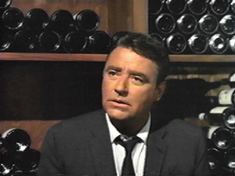
We see Frankie waiting outside Kay’s place later that night. He waits until her date leaves, then runs up to her door. Kay answers still wearing her dress clothes (meaning that she didn’t, well, you know…). She tries to blow Frankie off, but bends to his demands for a quick cup of coffee. However, the promised "most unusual resturant you’ve ever seen," proves to be a yacht. Kay reacts with confusion, until Frankie points out the nameplate, the Miss Kay-B. He has named his boat after her (awww!). He invites her aboard for that cup of coffee, and then attempts to romance her (you can probably imagine the standard ‘melancholy romance’ music that plays in the background). Frankie assumes that, now that he has so much materially to offer, she’ll fall into his arms. Kay resists, however, alluding to the darkness in Frankie that still exists, just hidden a little better. Frankie responds that it’s his dark side that attracts her. She ‘wants’ a nice guy, but they don’t excite her the way a jerk like Frankie does. (Gee, good thing there aren’t a lot of women with that problem.) Kay replies that the only reason that he wants her is that she hasn’t let him use her like other women have. Once she does, he won’t be interested in her anymore. (Gee, good thing there aren’t a lot of men with that problem.) Kay leaves, demanding to be driven home. Rejected, Frankie makes a late night visit to Sophie. Frankie starts undressing, leading Sophie to bitch about how she hasn't seen him for two months. (Chicks! It’s always something with them!) Frankie, naturally, turns petulant, whining angrily about how he comes over for a little comfort and ends up getting nagged. Sophie gets all gooey and ends up sleeping with him. His pipe cleaned, Frankie gets dressed in a happy-go-lucky mood. Sophie, regretting having given in again, starts to give Frankie an earful about his lack of human emotion. Frankie ends up getting pissed off (surprise!), and gets back at her by calling her ‘old lady.’ Then he splits, supposedly for good, leaving Sophie a crying wreck. We next see Frankie arriving at a resturant. He’s meeting Kappy for dinner. As he enters, Frankie runs into fellow actor Steve Marks (Peter Lawford). Marks then follows him to his table. Frankie thinks that he wants to join them for dinner, but Kappy reveals that Marks is now the restaurant’s Maitre d’ (!). Such are the fickle whims of fame in Hollywood. Frankie reacts with shock (to say the least. Get this guy some acting lessons, would ya?) to his fellow thespian’s fall from grace. Kappy explains that it can happen to anyone, at any time. Frankie’s soon back to his old self. He orders Kappy to go to the studio and have them make Kay a full fledged costume designer. Kappy replies that, as only the agent for a powerful star, he has no right to just go to a studio and make demands (how things have changed!). Frankie, of course, has little time for this whole ‘ethics’ business, and commands Kappy to do his bidding. Since Frankie’s now his biggest client, Kappy has no choice but to obey. He agrees, but leaves early, disgusted with Frankie’s antics. Frankie then heads into the back of the resturant. There he finds Marks inventorying the wine collection. He tells Marks that he’ll speak with his director and try to get him a part in his next movie. Marks declines. He prefers to leave the film industry alone. Having seen his career die once, he fears resurrecting it will only mean having to watch it die all over again. Frankie, meanwhile, remains seriously freaked out at how quickly Marks’ star fell. He offers Marks money, expecting him to resist taking it. Marks, however, has no pride left and grabs the cash. Then he bitterly warns Frankie that this gift was made not out of generosity, but fear of having the same thing happen to him. And for those who don’t get the point of this scene, it’s to foreshadow Frankie’s possible fate if he doesn’t turn nice (because that’s the trait that ensures success in Hollywood). Obviously affected by Marks’ words, Frankie bolts out of there. Presumably before Marks tells him that he’ll be visited by three ghosts that night… Kappy drops by Frankie’s place as he’s sunbathing in the back. Frankie tells Hymie to make Kappy a Spanish Omelet. When Hymie informs Kappy of the ingredients, Kappy grimaces and just asks for orange juice. Comedy! (Bennett must have had trouble with these lines, as you can plainly see him looking down at a cue card located on the counter in front of him.) Kappy’s come by because the studio forgot to inform them that they planned to re-sign Frankie’s contract. Frankie just has to sign a waiver and things will be back to normal. When pressed, Kappy admits that Frankie now has the legal right to try to renegotiate the deal. But since the studio made an honest mistake, Kappy would be uncomfortable trying to take advantage this way. (This ‘ethical agent’ element, by the way, has now officially moved the film into the realm of science fiction.) Frankie, of course, has no such scruples, and orders the unwilling Kappy to squeeze the studio for more money. Kappy begs him to do things the honorable way. You know, like they normally are in Hollywood, where a man’s word is his bond. Frankie, though, is still seething over how studio head Regan called him meat all those years ago. Now it’s payback time. (Frankie seems to have gotten over the whole ‘Steve Marks’ thing pretty quickly.) This demonstration of Frankie’s boorishness is interrupted by a phone call. It’s Kay on the line, and Frankie heads inside to take it. She’s called to thank Frankie for getting her the promotion. She believes that the whole thing was an act of kindness on his part. Of course, it was really a cynical maneuver on Frankie’s part to get her back. Frankie furthers his plan by inviting Kay down to Tijuana to watch the bullfights with him that afternoon. Believing that he’s starting to change, Kay happily agrees. Sure enough, we soon cut to some stock footage of a bullfight. Fane is the guest of honor, and the matador comes over to salute him before the fight begins. Meanwhile, a ‘comic relief’ loudmouthed American couple, Barney and Trina, is sitting next to Fane, gawking at this close-up celebrity. They start jabbering at Frankie, telling him what big fans they are. The guy introduces himself as Barney Yale (Oscar winner Ernest Borgnine, who seems to have appeared in every single Bad Hollywood Movie from the late ‘50s through the early ‘70s). Yale’s a private investigator, and gives Frankie his card. In a ‘comic’ bit, the couple invite Frankie and Kay to be witnesses at their ceremony that afternoon. Only they’re not getting married…they’re getting divorced! (Cue laughtrack.) And the hilarity continues. Barney is so distracting that Frankie misses the actual slaying of the bull, done in his honor. Ha ha!
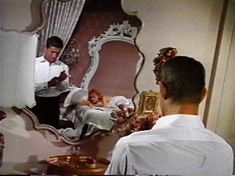
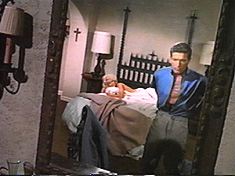
We go to the divorce. Sure enough, Frankie and Kay watch while Barney and Trina get unhitched. The couple is quite gleeful to be divorced from one another, and is in a celebratory mood. Again, this is all supposed to be funny. (How come the ‘comic relief’ in these things is always so much less funny than the ‘drama’ it’s to provide relief from?) Not too realistically, Frankie and Kay join them at an incredibly bogus Mexican nightclub for some post-divorce revelry. Particularly that Frankie would deign to hang out with these two is utterly unbelievable. So why does he? IITS (It’s in the Script). As Barney dances with Kay, the tipsy and emotional vulnerable Trina babbles away to Frankie. She lets slip that Barney has tons of money hidden away under the name of Chester Tumwater. Barney isn’t aware that she knows about his alias. But she obviously expects ‘Mr. Tumwater’ to take care of her in the future. Frankie and Kay duck out and are soon driving back towards LA. Mesmerized by this ‘perfect’ day, they pull over to the side of the road. Kay, believing that Frankie has changed (after all, she has the evidence of an entire afternoon and evening before her), tells him that she wants to be a ‘woman’, not a ‘girl.’ In other words, she’s almost ready to give it up. Frankie tells her that he ‘thinks’ he loves her (how romantic!). He asks her first to spend the night with him, then asks her to marry him. So they head back down South. Frankie and Kay get wed in the same chapel where the Yale’s divorce took place. Barney and Trina now act as their witnesses. (Life’s just one big circle, isn’t it?) Further excruciating ‘comedy’ ensues: the dishonest Mexican justice of the peace tries to overcharge them; his wife provides really bad musical accompaniment and singing for the service; etc. Man, my sides are splitting! (Or is that my head?) Finally, Frankie and Kay are declared Man and Wife. Next, a powerful ‘artistic’ moment. It’s the following morning. Frankie is dressing in front of a mirror while Kay lounges (with strategically placed sheets) on the bed. This exactly parallels the earlier scene where Frankie slept with Sophie and then blew her off. This is the director's way of subtly indicating that Frankie really doesn’t feel anything for Kay now that he’s had her (duh). When Frankie refuses to take time off for their honeymoon, citing business reasons (he’s trying to gouge the studio for more money, remember?), Kay experiences her first doubts. Back to Hollywood. We learn that Frankie soon has a reluctant Hymie acting as his pimp. Apparently, the whole marriage thing isn’t Fane’s bag (duh). Utilizing a brilliant metaphor, Hymie explains that Frankie uses these women like Kleenex: he uses them once and then tosses them away. (Gee, there’s an original simile!) Hymie’s having trouble with what he’s becoming, but is too far under Frankie’s spell to change. Meanwhile, Kay is still married to Frankie, but knows that the marriage is a sham. She confronts him as he comes in late one night. She tells of a feeling she has that there will be severe consequences if Frankie doesn’t straighten out soon (wink, wink). Frankie, of course, ignores her. By the next scene, things have already started to fall apart. Kappy, Sophie and Regan are screening rushes. Regan, ignoring Kappy’s halfhearted protests, notes that exhibitor figures indicate that Frankie’s box office appeal is nil. He points out that all of Fane’s earlier hits featured big name co-stars like John Wayne or Kirk Douglas. But when he stars alone in a film, it bombs, even when the reviews are good. (All this, by the way, is credible. To give what little credit is due, this is a realistic scenario to explain both Frankie’s initial success and subsequent downfall.) Sophie, obviously bitter over personal issues, now takes Regan’s side. The ever loyal Kappy continues to argue earnestly for his client, but it’s a losing proposition. Nor is his case helped by Frankie’s shenanigans on the sets of his movies. Not too surprisingly, Frankie is one of those argumentative prima donnas who’s always halting production on a whim. Thus, he ends up costing the studio additional production costs on top of the poor box office returns he generates. Regan walks out, indicating that Frankie’s days at Galaxy are over. Kappy, meanwhile, engages Sophie in a mournful conversation, about how she’s become a bitter, spiteful person since Frankie screwed her over. Frankie gets his first whiff of trouble when he asks Kappy for some money. (I guess that Kappy is his business manager as well as his agent. This doesn’t make much sense, but why else would Frankie ask Kappy for money?) Kappy replies that there isn’t any. Frankie’s overdrawn, living beyond his means, and owes back taxes to boot. Kappy drops the bombshell that Regan’s not picking up Frankie’s contract. Frankie doesn’t want to hear it. Hymie then narrates a little montage of Kappy trying to get Frankie work at other studios. But the word is out on Frankie’s lack of box office clout, and it’s no go. We see Frankie meeting with Kappy for lunch. Kappy lays it all out. He had warned Frankie that if he forced Regan to knuckle under during those contract negotiations, Regan would remember it. He did, and now the dismal figures on Frankie’s last several movies have been circulated all over town. Frankie finally starts seeing how much trouble he’s in, and begs Kappy to save him from ruin. And since Frankie has already blown all his money, he can’t afford to wait for the right project to come his way. The only available opportunity is the humiliating comedown of starring in a television pilot. Frankie’s outraged at this. (Movies and Television were considered two different worlds in those days, with TV a distant second in prestige.) He knows that if the pilot fails to generate a series, his career is effectively over. Kappy tries to get him to see reality, but Frankie storms out. Things aren’t great on the home front, either. Frankie comes home to find Kay dressed up in one of those elaborate lingerie deals that were considered hot in the ‘60s. When Frankie asks her to lay off, citing a bad day, she snorts. "You should put that speech on tape," she replies. "It’s gotten to be a fire-proof, gold-plated, diamond encrusted excuse for never talking to me." Man, that screenwriter’s ear for naturalistic dialog is uncanny, isn’t it? Frankie finally humiliates her even more by rejecting her physically, and again ends a scene by existing the room. Has any character in film history stormed out of more rooms in a mere two hours?
Next up is another of the film’s ‘clever’ parallel scenes. Frankie is sitting in a connected waiting room as some TV guys try to get a backer to sponsor his pilot. This is set up exactly like the scene where he waited to see if Regan would offer him a contract. In other words, Frankie is right back where he started. This is even more humiliating, though. After all, then a studio head was deciding his future. Here it’s in the hands of the owner of a paint and tile company. This guy is played by Oscar winner Walter Brennan, in the latest of the film’s what’s he doing here? cameos. (Notice how all these cameos are by Oscar winners? Get it?) He pompously goes on about how the star of his show must be someone worthy of representing his fine, upstanding company. As the star, Fane would be required to do commercial spots for the sponsor company (this was pretty standard at the time). Frankie, stuck listening to this in the waiting room, is livid with anger. Of course, unlike the earlier scene, it makes no sense here that Frankie would be sitting in the waiting room. He’s a name actor now, and you’d certainly think they’d want him to use his ‘star power’ on any potential sponsor. Frankie gets a call from Hymie. Taking it in the outer office, he learns that he’s been nominated for the Academy Award for Best Actor. When Kappy comes out to fetch him into the meeting, Frankie arrogantly tells him to go back in and blow off the offer. Kappy is dismayed. This is a major network offering, and they’ve put a lot of time and effort into the project. If Frankie backs out in this manner, he will be blacklisted from any future television projects. (So the script tightens Frankie’s noose.) Needless to say, Frankie doesn’t listen. "Just go sliding back in there," he sneers, "and tell them, ‘game called on account of Oscar!’" Frankie takes off, leaving Kappy holding yet another bag. Next we see Frankie arriving home. He’s been driving around for hours, contemplating how close he came to ruin. Hymie informs him that the phones have been jumping. Frankie’s now officially ‘hot’ again. Kay calls, excited at the news. Frankie wanders off to his room, bewildered by this sudden turn of events. That night Frankie is rolling around in his bed, sweating profusely. The hackles of the experienced Bad Movie buff rise in delight, anticipating a horrendously bad dream sequence. Sure enough, ‘dream’ music starts. We are soon treated to the most cliché format for movie ‘dreams’: The parade of superimposed characters repeating lines from earlier in the movie, talking about what a bum Frankie is. Unfortunately, they don’t go as far as the breakdown scene in The Lonely Lady. There the characters’ disembodied heads start spinning around, creating the obligatory vortex for the main character to ‘fall’ through. Still, this is pretty choice stuff. The scene is capped, of course, with the mandatory ‘dreamer waking and jutting up into the camera’ shot. How come people in movies always sit up when waking from a nightmare? Don’t people normally just come awake and lie there? His fears fully awakened, we see Frankie having a secret late-night meeting with Barney Yale. Frankie’s scheme turns to be laughably Machiavellian. He’s going to have Barney leak the fact that he, Hymie and Laurel were arrested for prostitution and procuring, and then jumped bail. His convoluted reasoning is that it’ll look like one of his fellow nominees is playing dirty by trying to smear him. Frankie’s then counting on a backlash ‘sympathy’ vote to ensure him the Oscar. Sure enough, Hymie runs in the next day with the papers blaring the news. When Hymie questions Frankie’s oddly cheerful reaction, Frankie lays it all out for him. Hymie is less than pleased, noting that both his and Laurel’s names have been smeared along with Fane’s. "You lie down with pigs, you come up smelling like garbage!" Hymie sneers. He observes how everyone around Frankie ends up taking a fall for him. Especially galling is when Kay runs into the house, attempting to comfort Frankie over this ‘injustice’ done to him. Fane goes along, playing the victim. Hymie leaves the room, ashamed that he doesn’t have the guts to walk out entirely. We next see reporters swarming around the rich buffet that Frankie provided for his press conference. I think that this is supposed to be further evidence of how ‘cynical’ the movie is. Frankie provides the carefully edited truth, explaining how his reluctance to get ripped-off led to him, Laural and Hymie being arrested on false charges. Frankie even milks Laurel’s death, noting sorrowfully that she’s not here to defend her besmirched name. And sure enough, having laid out all this out, the press soon turns to questions of whether one of his fellow nominees is trying to smear him. Frankie hams it up, ‘nobly’ refusing to believe that any of those fine fellows would commit so dastardly an act. He’s shocked, shocked, that anyone would even suggest such a thing. Hymie can only stand there with a disgusted look on his face (which none of the reporters standing five feet away notice) as Frankie continues on with his charade. Frankie and Kay attend a swanky ‘do at Regan’s mansion. This is his first public outing since the news hit, and his first chance to gauge public reaction. But as soon as he appears, his fellow Hollywoodians swarm around him in support. His plan is working perfectly. Kay, meanwhile, joins Edith Head by the bar. This is Edith’s third quick appearance, and she hasn't even had one line. Perhaps she suffered from stage fright. Frankie goes to thank Regan for the party. Regan, however, wants him to know that he still regards Frankie as a colossal jerk. When Frankie asks why he threw the party then, Regan replies that he doesn’t think Frankie would understand. "Then tell it like a giant Golden Book," Frankie snarls. "I think I can cut it." (Does anyone else get the impression that they inserted lines at random in this picture?) Regan goes on to give a hilariously pious speech about how the ‘smear’ against Fane also reflects on the sacred integrity of the Academy Awards themselves. "The Oscars mean a great deal to me, to many of us in the industry," Regan expounds. "They’re a symbol. We don’t like to see them tarnished." Perhaps he should have given this speech when Dr. Doolittle was nominated for Best Picture. Frankie comes home from the party to find Hymie waiting up. "It’s the village locksmith," he mumbles. "It sounds like he wants to turn the key on you." Uh, yeah, and ‘the geese fly south at midnight.’ This somehow turns out to mean that Barney Yale wants to meet with Frankie. They meet out at Frankie’s yacht. Barney reminds Frankie that he promised never to reveal who was behind the smear. However, now the other nominees’ publicity men are offering him money to confirm that it wasn’t their clients that were responsible. Of course, this would cause Frankie’s entire scheme to collapse. Obviously, Barney’s hitting Frankie up for more money. "This is starting to smell, Yale," Frankie sneers (there a lot of sneering going on in this film). "Put a little chlorophyll in the conversation!" Barney could get five grand from each of the other nominees, but offers to stay quiet for $15,000. Frankie tries to tell him the truth, that he doesn’t have the money. Yale, of course, is more than a little skeptical. To his mind he’s giving Frankie a square deal, especially since he could make five thousand more by confirming the innocence of the other four nominees. He gives Fane forty-eight hours to come up with the cash.
Frankie and Hymie are soon running emergency operations. While Frankie tries to borrow the money, Hymie has feelers out trying to find Trina, Barney’s ex-wife. "I told you," Hymie reminds him, "you lie down with pigs, you get up smelling like garbage!" Finally getting ahold of Kappy, Frankie runs over to his house to beg the fifteen grand. To his shock, however, Kappy hands him not a check, but a release form. He’s quitting as Frankie’s agent. Frankie doesn’t understand. With the Oscar nomination, he’s hotter than ever. Kappy explains that the only reason Frankie got the nomination was that the character he played was a heartless pig. In other words, Frankie was convincing because he was playing himself. Kappy tells him that he just doesn’t have time for him any more. He’s becoming an old man, and doesn’t want to waste any more of his life being used and degraded by Frankie. Kappy takes his time, luxuriating in his freedom to at long last tell Frankie exactly what he thinks of him. Oh, and there’s also a few lines about how other people in Hollywood are only jerks when they have to be. Wouldn’t want the audience out there to think that stars are actually selfish, self-regarding megalomaniacs. Nope, that bill only fits our pal Frankie here. Meanwhile, Hymie’s failed to dig up Trina. And, he points out, Frankie started this whole thing. "I know, I know," Frankie snarls (there’s a lot of snarling going on in this film), "your favorite dumb line! Lie down with pigs, get up smelling like garbage." Now, they inserted this line twice in the movie to back up the contention that it’s Hymie favorite saying. Still, it should be noted that he first used it after three quarters of the movie was over and again about ten minutes after that. So they didn’t do the best possible job of making this line a regular part of Hymie’s litany. As usual when his back’s against the wall, Frankie starts begging. In this case, he begs Hymie to do something, anything, to save his ass. Frankie starts blathering, finally coming up with the idea of having Barney murdered (!). Hymie finally draws the line at this suggestion. When Frankie keeps pushing the idea (it’s for ‘both of us,' he says), Hymie flees from the house. Dispirited, Frankie heads home. Sam tells him that he had a call, and it turns out to have been from Trina. They’re soon meeting at her apartment. Pretending that he’s looking her up for social reasons, Frankie unwraps a bottle he brought. Trina’s not as stupid as she looks, though, and has figured out that Barney must be blackmailing Frankie. She’s even figured out the whole scheme about Fane smearing himself for sympathy. Trina offers Frankie a deal. She’ll give him what he needs to get Barney off his back, and then (assuming he wins the Oscar and wields enough power) he’ll make sure she gets some acting parts. He agrees, and she provides him with info on Barney’s secret bank accounts, which hold money he never declared to the IRS. By the next shot, Barney’s opening his office door to meet Frankie’s fist flying into his face (co-incidentally, I’m sure, this is just like the scene where John Travolta punches Dennis Farina in Get Shorty). Problem solved. Frankie and Kay are having a nice dinner at home, celebrating Frankie’s reported lead in the Oscar race. This is interrupted by a drunken Hymie, finally coming to tell Frankie off. "You’re some kind of poison!" he sneers (see previous note). Hymie actually came close to helping Frankie kill Yale, and it’s made him realize how far over the line he’s gone. Frankie, meanwhile, is trying to cover up in front of the shocked Kay, who didn’t know about any of this. "I never said anything about creaming Barney Yale," he lies. "Birdseed!" responds Hymie. (Birdseed?!) Then he finally drops the big bombshell he’s been carrying around all these years. Laurel died on the operating table, because she had a miscarriage. A miscarriage of Frankie’s baby. Now, let me say that they’ve done everything possible in this movie to make Frankie look like a jerk. He even considered having someone murdered. But, to be fair, Laurel kicked him out without telling him about the baby. So the basis for assigning him blame for this particular incident seems a little weak. Of course, to Hymie, who always loved and finally only got Laurel because Frankie was out of the picture, the whole thing is Frankie’s fault. Hymie blabs the truth to Kay about the whole Barney Yale incident. Frankie slugs Hymie to shut him up. But Hymie, having learned some lessons from the master over the years, hits Frankie from behind and wails on him once he’s down on the ground. Kay, finally waking up to what a complete bastard Frankie is, asks Hymie to take her away. Even Sam leaves. Frankie’s left all alone. So, finally, we’re back at the Awards ceremony that began the film lo those many months ago. Bob Hope introduces actress Merle Oberon, here to present the Academy Award for Best Actor. The ersatz nominations are read: "Richard Burton for ‘Grapes in Winter,' Burt Lancaster in ‘The Spanish Armada,' Frank Fane for ‘Breakthrough…," We pan across the audience to see much of our cast of characters: Sophie, Kappy, Regan. We miss the last couple of nominees because Hymie resumes his narration. "So here you sit, Frankie. On top of the Glass Mountain where you wanted to be [see below in IMMORTAL DIALOG]. Looking down at the rest of us. I hate to admit it, but you proved your point. It looks like it’s the only way to climb that high." As the envelope is opened, Frankie begins rising from his seat, tasting that Oscar. "And the winner is Frank…," Oberon begins, "…Sinatra." As the rest of the audience applauds, Frankie dazedly stands there, in front of the whole filmmaking community. After a long while, he finally wakes up enough to start applauding Sinatra. But as the rest of the audience rises in a standing ovation, Frankie sinks back into his seat, a broken man who’s lost everything. And on that cheery note, the movie ends. Good night, everybody!
AFTERTHOUGHTS: I guess my big question is: What’s the point of this film? There’s no hero to cheer. No one gets redeemed. Sure, Frankie pays for being a big jerk and a coward (at least where taking responsibility for his actions was concerned). So what? It’s like watching a version of The Christmas Carol where Scrooge fails to repent and ends up doomed for all eternity, like Marley. The film can’t even be described as a tragedy. Tragedies require something that is good (anything from a country to an individual man) to be destroyed because of the inescapable personals flaws of the story’s protagonists. However, Frankie was never good, and never really seemed likely to become so. Frankie does lose, but nobody else wins. Unless the Oscar itself it supposed to be the hero, defeating the villain by not being awarded to him. Still, if that’s the point, then where’s the victory in being awarded to Frank Sinatra?! (Who had actually won a Best Supporting Actor award for From Here to Eternity). Sinatra might be a great artist, but this is hardly a guy without his own sterling credentials as a jerk and a creep. It would be like if the movie was about an award for Best President of the United States, and Bill Clinton lost to Richard Nixon. (Or vice versa.) However, the choice of Sinatra (undoubtedly because he was the biggest actor they could get to do the cameo) to beat the fictional Fane is perfect, at least in an ironic sense. That’s because it utterly exposes the conceit that Frankie Fane would be some kind of aberration in the otherwise upright Artistic Citadel that is Hollywood. Ultimately, the film is two hours spent detailing the life of a jerk who finally gets what’s coming to him. That’s not Entertainment! IMMORTAL DIALOG: Hymie kicks off our tale with this bizarre, undigested
hunk of narration, expressed as he watches Frankie sitting expectantly at the Oscar
ceremony: Frankie provides an insanely involved intro to a bunch
of drunks who are waiting to get a look at Laurel’s gazongas. He's apparently
operating under the misapprehension that you must first rile up intoxicated males if you
want them to stare at naked chicks (I’m assuming that neither Andrea Dworkin nor
Catherine McKinnon helped write the following): Kappy and Sophie argue with Galaxy Studio head Kenneth Regan about offering Frankie a contract. At least, I think that’s what happens. You read the dialog below, then you tell me: Sophie: "Kenneth, what is your
decision?" Review by Ken Begg |