Another feature of... |
|
Another feature of... |
|
|
for
(2005)
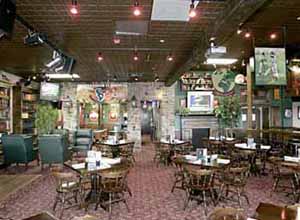
My role, such as it was, was rather more modest. I had been exchanging notes with Sandy for quite some time now. He had been hoping to come in for B-Fest last year, but a work emergency forced him to jettison his plans. Instead, knowing Sandy lived in Texas (Dallas, to be exact)—admittedly, a fairly large state—I passed along the contact info for Freeman (Houston) and Chris (a recent transport from Florida to Austin). I had hopes a get together might be arranged. Specially, many of us had for a while talked of finding a replacement for NOWFF, the New Orleans Film Fest. That yearly bad movie fest was propitiously run in July, just about exactly between the annual B-Fests in January where many of us in the B-Masters Cabal would get together. NOWFF afforded us all another such opportunity, and when they stopped running the event, much sorrow was felt in the land. Anyway, being a bit more energetic than yours truly, Sandy, Freeman and Chris quickly decided to set up just such a get together. Initially it was to just be held in Freeman’s living room, but they eventually decided to make it bigger so as to allow us to invite more people. In the end, it was decided to rent a hotel meeting room for a day and screen the movies there. In order to toss me a bone and make me feel like I was contributing something, I was put in charge of programming the movies. There really wasn’t much to this. In order to leave wiggle room, we decided to show but eight movies. Sandy, as official fest sugar daddy, got to pick two of them, and the rest of us one. The others were sponsor slots, so in theory there wasn’t much for me to program. However, only Chad Richard (Ambrose Bierce on the Jabootu message board) elected to sponsor a film. I myself gladly grabbed the other spots, so that I could actually pick more movies. I was mad with power, I tells ya! Meanwhile, we invited attendees to ‘sponsor’ a movie if they wished, so as to defray Sandy’s outlay. We invited a good amount of people, hoping to get maybe 30 or 40 people, but ended up falling quite short. However, I know of numerous people who wanted to go to this and couldn’t for whatever reason, so if we try it again next year, I think we’ll be more successful in that regard. So I booked my flight to Houston and arrived at Hobby Airport on the afternoon of Friday, July 22nd. Freeman kindly came and picked me up and I was soon teleported to his quite lovely home, where I was glad to renew my acquaintance with his wife Lisa. Lisa, I should note, is the Sweetest Woman in the World. Seriously. I’m not exactly known for my personal skills, but Lisa is one of those people who you meet and immediately feel like your old friends. Sadly, Lisa had contracted chicken pox recently and so couldn’t attend the show. Well, maybe ‘sadly’ isn’t the right word, at least from her perspective. I also met the family pug, Mavis, who’s snorting language I quickly picked up. Mavis appears pretty spoiled by Freeman, and I don’t think I’ve ever seen a more contented creature in my life than Mavis when Freeman at one juncture scratched her back with a miniature rake. The family also has three cats, but out of deference for my slight allergies, they were generally kept inside one of the bedrooms. Chris and his wife Christina and Stomp Tokyo partner Scott Hamilton—having himself flown in from Florida—arrived that evening after driving in from Austin. We went out for dinner at a local Mexican place that Freeman promised had burritos "as big as your head," but sadly these proved but 66% as large as any of our craniums. After that, we headed over to the Sugar Land Marriott where the show would be held, and where Sandy was ensconced with three of his comrades. Everyone who knows me knows my brain is organically damaged and can’t remember names, and of course in two seconds I didn’t remember who his friends were, but they were all good chaps. It was great to finally meet Sandy, who has sent me notes on a mind-boggling range of topics whenever I actually have posted an article. (He’s also so generously donated to the site’s tip jar that I had to ask him to no longer do so, as I was feeling guilty for taking so much of his money.) Seriously, he’s a genuine polymath, and sometimes I’ve literally laughed at the array of topics on which he’s been able to hold forth on in an apparently impromptu manner. In person, Sandy was much the same, and often tends to speak in a manner that suggests he must quickly issue forth the high-pressure stream of the ideas in his head lest the pressure build up and his bean explodes. Anyway, we all gloried for a while in that weird feeling of being Amongst Our Own, before calling it a night to grab some z’s before the fest the next day. We then returned to Freeman’s house and hit the hay. Up early on Saturday and we all went to the local Panera Bread for breakfast and to meet up with Sandy and his posse. A few cinnamon buns and croissants later, we required to the hotel to get set up. I was made greeter, which amounted to handing out a program sheet, a souvenir ‘ticket’ to the event, and 3-D glasses. Chris was in charge of the shorts to run between every movie, and the glasses were required for one of them. It says something about the attendees that everyone lit up when they saw the 3-D specs. As I said, attendance was lighter than we had hoped. I myself knew over half a dozen people who had hoped to attend but couldn’t for whatever reason. In the end, aside from Chris, Christina, Scott, Freeman, Sandy & the Three Amigos and myself, I am happy to say that the Jabootu message board was well represented. Chad Richards (Ambrose Bierce) was the show’s first sponsor—Historians of the Future, take note!; Kirk "kdraut’ Draut, a Houston resident, came in with his lovely wife Patty (who unexpectedly wasn’t there as a Nerd Widow, but instead as an enthusiastic participant, and a quite funny one at that—also, I really hope I got that name right, if not, SORRY!, but really I need to start writing that stuff down), and Ken Schaefer, who was able to come in at the last minute. We were glad he did. By the way, people who make a hobby of mocking bad movies have often been accused of being petty, bitter sort of people. (See Bill Warren’s remarks to his effect in the Robot Monster chapter of his otherwise essential Keep Watching the Skies.) I suspect some of this is grounded in the fact that pioneer bad movie popularizer Michael Medved went on to become a well-known conservative commentator, but anyway. Well, let me tell you, that idea couldn’t be further off the mark. I have never met a mean spirited bad movie buff, and sure enough, Sandy, his friends, Chad, Kirk and Patty, and Ken Schaefer proved to be about the nicest folks one could hope to meet. Kirk, for instance, is a Houston local, and volunteered to drive people around if needed. It wasn’t, but damn, that was a nice offer. And even after the show, when they had every reason to hate all of us (especially me, as the sponsor of Double Agent ’73), they offered to put people up in their house next year. Whatever else, T-Fest was meant as a way to get together with friends old and new. Mission accomplished. Nor did the small number of attendees hurt the actual movie marathon. We had fifty chairs set up, but had enough room for everyone to spread out, and everyone was extremely vocal. We ‘filled’ the room, and in no way did we seem undermanned. Everyone called out japes throughout, and I believe we all of us had a grand time. If anything, the small crowd allowed for everyone to have a bit more presence in the proceedings, so it wasn’t really a bad thing. We opened, as we waited for folks to arrive, with some MST3K shorts and ‘music videos’ culled from various bad movies. The theme song to Mistress of the Apes caused the expected incredulity and hilarity from those who hadn’t seen the movie. I wasn’t really paying attention the time, but we stayed pretty much on schedule throughout, and will assume the noted times are roughly correct. 10:30 Gamera vs. Guiron Sandy provided a nifty English subtitled and letterboxed Japanese DVD of
this classic, featuring those two space chicks (and hot ones!) who plan to
eat the brains of the Kenny and his Caucasian sidekick buddy. As
immortalized on MST3K, the Kenny has an obsession with traffic accidents,
which I was amused to learn actually originated in the original script
rather than the American dubbing. This is classic sci-fi fare, with giant
monsters, a Kenny, a space ship, travel to another planet, teleportation
devices, the whole smear. Guiron is a giant reptilian dog monster with a
huge knife for a snout and the ability to shoot ninja stars. To show how
monty he is, we first see him effortlessly slicing apart a rampaging ‘Space’
Gaos, which is a guy in a Gaos suit that’s been painted silver. (Gaos was a
laser-firing pteranodon-type from an earlier movie who really gave Gamera a
lot of problems—he’s probably the most famous monster in the Gamera stable.)
There’s a comic relief goofy cop and an annoying kid sister to boot, and
this is just great stuff. By the way, maybe Sandy thought of this film
because the English distributor of these in the States was Sandy Frank. Can
you prove it didn’t happen?!
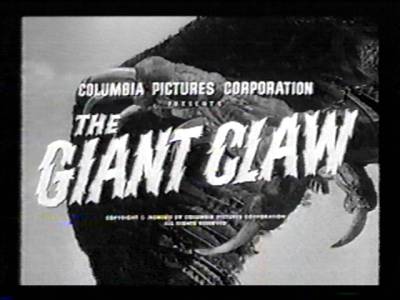
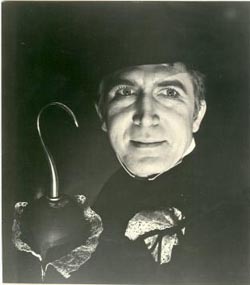
12:00 Chamber of Horrors (1966) Freeman chose this fun gothic horror movie with an interesting production history, a movie I’d been well acquainted with as a kid from its once regular TV showings. While a youngling I’d always loved the show Wild, Wild West, and Chamber of Horrors had a very similar vibe. Set (apparently) sometime in the late 19th century in Baltimore, the movie follows an early, elegant serial killer named Jack Cravatte (played by Patrick O’Neal, who has a lot of fun with the Vincent Price-esque part). Just so we get that he’s nuts, Cravatte is introduced forcing a justice of the peace to marry him and his fiancée, a woman he’s freshly killed for cheating on him. With this hint of necrophilia established, we watch as the baffled police—including a young detective played by Wayne Rogers (!)—are finally forced to call on the skills of amateur sleuth and ultra-suave ladies man Anthony Draco (the continental Cesare Denova), the proprietor of the city’s House of Wax, an institution famous for its sensationalistic tableaus of famous and gruesome murderers. The sculptor of these figures is the elderly, puckish Harold Blout (Wilfrid Hyde-White, best known as Pickering in the film My Fair Lady), himself a crime historian of some note. Draco quickly learns of a man frequenting an upper class brothel, who’s quirk is that he has his professional paramour play dead. The police are alerted, and Cravatte is duly apprehended. There follows a very expressionistic trial scene, during which Draco is given much credit for Cravatte’s capture. The villain is sentences to hang, but escapes as he is transported to prison, although this requires he hack off one of his own hands. Cravatte, presumed dead, eventually returns to town with an attachment on his shortened arm on which he can fit any number of malign devices, including the inevitable hook. He then begins killing those who were responsible for his imprisonment, and constructing a ‘body’ from the parts he takes from them. Draco figures he’s on the list, and the hunt is on. Chamber of Horrors is an extremely fun film, and it’s a shame it’s not officially available as of yet on either video or DVD, something which can be said of dozens of interesting television movies of the ‘60s and ‘70s. CoH had a more interesting history however. After being filmed as a telepic, and being judged too gruesome (I’m sure that necrophilia angle didn’t help), it was recast as a theatrical film. To spice things up, the film was given a couple of William Castle-esque gimmicks. As an opening crawl reveals, at four points of "extreme horror" during the film, the audience is warned of approaching carnage by the use of the Fear Flasher (the screen turns red) and the Horror Horn (a distinctive note is heard). This doesn’t really do the movie, which is really a nice and surprisingly sumptuous piece of work for a TV movie—kudos to director Hy Averback—any favors, but the gimmicks were heavily featured in the film’s advertising, and probably remain what it is best known for. This is a great piece, and the knowledge that the television series it was meant to be a pilot for never materialized saddens me greatly. Trivia note: Hyde-White again played the role of sidekick to a European investigator of the macabre in a matched pair of pilot films, Fear No Evil (1969) and Ritual of Evil (1970), starring Louis Jourdan as a modern day psychiatrist who tends to bump into cases of the supernatural. These as well sadly joined the line of great TV pilots featuring investigators of the occult (The Norliss Tapes, Dark Intruder, Spectre, etc.) that never were made into series. 1:30 The Giant Claw This was the one movie we all instantly decided we need to show, and since we were short of slots, I took it was my official pick. And why not, it was, after all, the first movie reviewed on this site. (You’ll notice that Jabootu was well represented at the Fest, with three of the entries old-time review subjects.) As such, I don’t have overmuch to add here, but I will say the small contingient of Jabootu message boarders in attendance were ready. Most notably, they immediately started shouting the number of each use of the work ‘battleship,’ of which there are more than several. The giant buzzard marionette didn’t look any less goofy projected up on a screen, and I got to enjoy some of my favorite moments, including the plane that while crashing to earth pauses during its plummet and even moves backward for a moment (the model plane having become briefly caught up on its guide wire), and the bit where ‘flaming debris’ is dumped quite nearly right on star Jeff Morrow’s head, and there’s a quick cut where he undoubtedly jumped up and punched the prop guy in the face. 3:00 Death Race 2000
4:30 Dinner Break Since we didn’t have a lunch break, we decided to go with an early dinner break, and scheduled an hour and a half for it. Moreover, a quick web search indicated that a place called the Baker Street Pub was near the hotel (in fact, it proved literally next door), and we designated that as our dinner spot. One advantage of the small size of our group was that we were all able to sit together at a large table, where I sat between Sandy and Chad. The Baker Street (duh) had an old English theme, and dinner selections ranged from my bacon cheeseburger to ‘bangers and mash’ (sausages and mashed potatoes) and fish and chip. The gigantic hunks of fish looked great, and being a slob, I was able to glom onto Chad’ second piece after he barely finished the first. Getting some actual conservation time was great, and we’ve already decided that next year we’ll expand the dinner break to two hours rather than rush through it. One disadvantage of moving the Fest location next year—and there are several reasons for doing so—is that we’ll have to hope to find so convivial and convenient a spot for dinner. Depending on the size of the group next year, we might have to grab a private room somewhere. We ran slightly over the dinner break—we didn’t want to nag our guests—and the delay was exacerbated when it took about twenty minutes for someone on the hotel staff to show up and unlock the screening room. At this point, we were maybe half an hour off-schedule, and by the end of things, were closer to an hour off. However, that was our biggest snafu, so I think on the whole things went pretty well. In theory, we should do even better next time. I wasn’t really keeping track of the various starting times, so these are estimated.
6:30 1,000 Year Cat Sandy provided this typically weird Chinese flick featuring (I think) a space princess, a gross Lovecraftian monster that kills in numerous highly disgusting ways, mega-violence, and tons of martial arts and John Woo and Terminator-inspired gunplay. The movie’s highlight was a protracted and quite riotous martial arts battle between a dog and a cat. (!!) I have to admit, I’d never seen that before. Other than that, as usual, I had a lot of trouble figuring out what was supposed to be going on. That just reflects my Western bias towards linearity, however. Sometimes you just have to let Art wash over you. 8:00 Double Agent ‘73 The idea is that there would be eight movie slots. Sandy would have two; Chris, Freeman and I one. Then three would be left for sponsors, so as to defray expenses. Due to the scheduling tightness, I took Giant Claw as my choice, and Chris took the T-Rex slot (since we named the affair T-Fest, we decided we should have a movie with a T-Rex movie in it every year). In the end, however, Chad took one sponsor slot, leaving two. As the Programming Czar, I glommed on the two remaining sponsor slots so as to get to choose more movies. I was mad with power, I tells ya. Easily the best buck I spent this weekend involved sponsoring this movie, which brought a constant parade of horrified shrieks and groans from my fellow attendees, most of whom had never seen this ‘film.’ The amazing thing is that the movie is horrifying even when Chesty Morgan isn’t topless, or kissing someone with those liver-like lips of hers. Her clothes are so bad that when she’s naked, you yell, ‘Ugh, get dressed!’; and when she’s dressed, you’re like, ‘Ugh, take those clothes off!’ And the hideous, ‘70s décor…seriously, this movie is a litany of visual horrors. I ate the pain of my fellow attendees like sweet, sweet candy. However, once the movie was over, I immediately realized I would never show anything that great at T-Fest again, even if we run it for another twenty years. By the way, when Kirk wrote on the board that his wife was attending, I gave him a head’s up on the Double Agent ’73 showing, because not every woman wants to sit through a film chock full of almost human nudity. Plus, of course, it’s just a horrible movie. "We’ve seen worse," he responded. "Worse than Double Agent ’73?!" I thought. Sure enough, Scott later reported that Kirk and Patty had revised their opinion on that after sitting through the movie. BWAHAHAHAHAHAHA!
This was my flyer. I kept going back and forth on this one, but finally I was like, screw it, you’ve got to take a chance now and then. (Moreover, programming is the fun part of the show, so I’m not sure I’ll be getting another crack at it next year, as someone else might want a chance.) Four Skulls is a very fun voodoo film featuring a curse that sees each male member of the Drake family decapitated at the age of 60. This film has a fun William Castle vibe, as the film abounds in shrunken heads and skulls and the living dead, and is available on a strikingly good transfer on one of the MGM Midnight Movies double bill discs. Another advantage was that I was pretty sure that no one other than maybe Freeman would have seen this one before. On the other hand, it was perhaps a tad too slow. I don’t think anyone in any way disliked the film, and it probably provided a nice respite after Double Agent ’73, but it was a roll of the dice that perhaps did not completely pay off. There were moments, though, when the rest of the attendees seemed to enjoy the film to the same extent I do. Anyway, I have no regrets! Any fan of old horror movies, though, should seek this one out. It’s a lot of fun. My favorite moment was when a bed-ridden Jonathon hallucinates a bunch of floating skulls, and Freeman started doing Michael Caine from The Swarm: "Look, Jonathon, there’re no skulls here. I promise you. There’re no skulls." Damn, I wish I’d thought of that one. 11:00 The Last Dinosaur Hopefully one trademark of the Fest, should it continue on for a while, would be to wrap things up with a T-Rex movie. Sandy is not a fan of this film, and Chris considered showing Tammy and the T-Rex instead, but in the end, we went with this. I love this movie, so I had no problems with it. Ah! The great theme song, the ‘world’s greatest tracker’ who can’t hit a giant T-Rex with a spear, the ninja triceratops, and so, so much more. Aside from Sandy, I think this was a pretty popular choice. After that, we oldsters were pretty trashed, and as it was 1:00, decided to call it a night. However, me made plans to get back together at Panera the next morning for a farewell breakfast. Meanwhile, Scott and I went back to Casa Freeman, where we examined the amazing Williams Video Library, and watched a Peter Cushing BBC Sherlock Holmes episode. Thus it was about 3:00 when I hit the hay. The next morning we blearily roused for the breakfast appointment, and got together with the Petersen Party and Chad. Kirk and Patty had already made plans for the day, sadly, and Ken couldn’t make it either. Anyway, after a final chat, Sandy and his posse headed out. We bid farewell to Chad, and then the rest of us headed back to Freeman’s place. Eventually Chris, Christina and Scott headed back to Austin (from where Scott would catch his flight back home), and then Freeman gave me a ride to Hobby Airport for my return flight. And that was that. It was over way, way too fast. Having now done one of these, we will have to figure out what changes to make next time. Amongst the things we’ve already talked about: Move the Fest to a hotel either in downtown Houston, or near the Hobby airport, to help with transportation issues of incoming attendees. Pal of Jabootu Henry Brennan in the end couldn’t make the Fest, but pointed out at one point that the airport was thirty miles from the hotel, and some web research indicated it would cost $65 to take a cab from one to the other. (Texas. It’s big.) This year it wasn’t a big deal, but again, definitely something to deal with now. The second biggest change we’ve mulled would be to either assemble the film line-up ourselves and let sponsors pick one of the existing titles, or instead of offering to show whatever the sponsor wants, have them provide a list of acceptable films from which we pick one. The fact is that balance is the most important thing when showing a mess of films, so as to create a fairly harmonious whole, and having eight or nine different people choosing each entries can be disastrous. We’ll see how that goes. The line-up was pretty good, but I personally thought we could have used a few less monster/horror/sci-fi films. Next year we’ll hopefully have a bad drama (I think I can ensure that), a kung fu movie, a musical, a JD flick (Hot Rods to Hell?), etc. We’ll see. I’d also personally prefer films that haven’t been featured on MST3K or at B-Fest. One advantage of working off DVD is that the range of available titles is almost limitless. Announce the date and line-up earlier, so as to increase interest and hopefully the size of the audience. Also, come up with a mascot image and perhaps a poster, etc. In other words, basic marketing stuff. Did everyone in earlier and/or hang around longer, because we really needed more hang-out time. I want to thank everyone for the chance to have such a great time, with a
special thanks to our own Medici Prince, Sandy Petersen, and the delightful
Jabootu board crew; Chad, Kirk, Patty and Ken. Guys, I really enjoyed
meeting you, and look forward to seeing you all again. *****
Saturday morning, my ever-supportive and long-suffering
wife and I ventured down to Houston's southwest side for T-Fest. We met the
High Priest himself, Ken Begg, along with Freeman "Dr. Freex" Williams, the
Stomp Tokyo boys, Sandy Petersen, Ambrose Bierce, and a small but
enthusiastic group of b-movie fans. Aiko will probably grow up to be Japan's answer to Ralph Nader, as he dreams of finding a star (planet) with no war or traffic accidents. Traffic accidents? "Outer space speed"? Is that faster than ludicrous speed? Guiron is quite possibly the only giant monster designed by Ron Popeil. He slices, he dices, he shoots shuriken from his ears, and he can still peel a tomato. The two babes are the last members of a society that weeds out its useless members. I guess these two were the ones operating the killing machines and they won out be default. Gamera is teabagging Guiron. If he gives him a Roman Helmet, I'm leaving. Now Gamera is stealing moves from Gymkata.
If she's 14, I'm the Pope Gratuitous go-go! Gratuitous jogging!
[*Chris Holland clarifies: "The mystery short was an episode of "Kure
Kure Takura," loosely translated as "Gimme Gimme Octopus."] Is that a wax head of General Zod? A Swiss Army prosthesis. Does it have the crappy tweezers and toothpick? Prostitution in New Orleans? Shocked, I am just shocked. They are making the most of that fog machine. Pepe the midget is the Scrappy Doo of the film. He can do anything! It's a hand-gun! How clever. Jeez, The Fog didn't have this much fog. Short - Rejected Animated chaos from Bitter Films. A bleeding anus is a Bad Thing (tm) Very cool blend of stop-motion and animation in the finale.
Exidor is back! And he stole Cal's fighter jet. It's a stealth buzzard? "As big as a battleship" is apparently a standard unit of measure. It's a magic morphin' fighter jet! Now it's a stealth, anti-matter buzzard with a force field. Wow No HO-scale train is safe from the giant claw. It's footage from 30 Seconds over Tokyo! How did that get in here? Maybe you should have installed the Meson cannon before you took off. Bye bye birdie. *****
Ladies drink free after nine! Next year's theme? All Betamax! No chaps without pants, Ken! Hire Claudia Christian to come in and comment on all the films! Raffle off a ‘Dream Date with Scott Hamilton!’ A kickboxing exhibition between Daniel Bernhardt and Olivier Gruner! All seats will be beanbag chairs! Elect a King and Queen of T-Fest and dump pig's blood on them! All the shorts will be hardcore porn from the silent era! Free throat lozenges!
*****
The Punisher
Basically, the Punisher always seemed to me a very direct rip-off of the Executioner, the lead character of a long series—eventually over three hundred of them—of pulp drugstore paperback books starting back in 1969. Mack Bolan was a Vietnam special forces vet, his family was killed by the Mafia, and used his combat skills to kill, ultimately, thousands upon thousands of mobsters. Frankly, I’m amazed there was any organized left in this country by the time he was done. The Punisher was basically the Executioner, a murderous sorta-hero awkwardly inserted into the Comics Code-supervised Marvel Comics superhero universe back in a 1974 issue of The Amazing Spider-Man. It wasn’t until later, when Wolverine of the X-Men confirmed a taste for anti-heroes, that the Punisher started getting his own series (and by now he’s had quite a few). In these the superhero aspects of the universe were downplayed in favor of often baroque but straighter killing-the-gangsters stuff. I’ve never really been sure why Marvel was never sued over the Punisher. Perhaps he floated around so long as a minor character that when he hit it big, it was too late to retroactively sue for copyright violation. The Punisher was featured in a famously awful and cheap film starring Dolph Lundgren back in 1989. Of course, that should have meant that a remake would have no trouble being better than the first movie, and in fact, the new film is better (snarky reviews of it to the contrary), only not nearly better enough. Still, although the film did poorly at the box office, it should very well on DVD, and there remains talk of a sequel somewhere down the line. Having now seen the movie, I can attest that the biggest problem is with the script. Some years ago, there became a vogue for screenwriting classes, which pushed a three-act template and formulized character arcs, etc., that were meant to make the results fall in line with the product Hollywood was making. These classes—along with the even more dehumanizing word processing script template, into which one mere poured some ‘content’—were all too successful. One of the reasons that movies are so unsatisfying now is because of this assembly line mentality. The Punisher script features several elements all too woefully familiar to moviegoers. In a conceit all too popular with comic book movies, the villain is tied directly into the ‘origin’ of the hero (Batman, Fantastic Four, Batman Begins, Daredevil). This is meant to tie plot threads into a neat little bow, but the problem is that the bow is entirely too neat, in most cases, to be very credible. Here it does make sense that the villain would be the Punisher’s first target, but even if it weren’t, you get the idea that the script would go in that direction anyway. Second, the villain and hero’s stories parallel each other. Yawn. Again, this is entirely too neat, too obviously artificial. In the comics, Frank Castle, a.k.a. the Punisher, sees him family murdered after they accidentally stumble across a Mafia hit. Of course, origin stories get tinkered with, and perhaps the later comics continuity is closer to what we see here, but frankly, the idea of out-of-control, random violence is more effective in explaining who a vigilante would consider his work than one who actually reaps revenge on those directly responsible for his travails. This is true with Batman, as well, and Tim Burton’s ‘retconning’ [retcon is geekspeak for ‘retroactive continuity’—revising and replacing a character’s ‘offical’ continuity] that the proto-Joker was the one to kill Wayne’s parents when he was a child was a hideously bad idea. Here, however, we get the tale of two fathers who lose their sons, blah blah. This kind of pat, highly rote scripting just makes you want to scream. Another typical Hollywood flaw is the tendency towards giganticism. As noted, in the books Castle’s wife and kid is killed. In the movie, the bad guys massacre an entire Castle family reunion, killing what must be like thirty people. Yes, that gives Castle even more reason to mourn, and makes his origin even more powerful. Dumbasses. Following the Plot-o-Matic™ scripting guidelines, Castle is then provided with a surrogate family of outcasts, so that we ‘get’ how he comes to live life again. This, of course, is so we ‘care’, because that’s what audiences want. Well, you know what, no we don’t. The advantage of genre stuff, which is by its nature composed of tropes, is that you can just cut to the chase. Castle is a super-FBI undercover agent who on his last case oversees a bust in which a mobster’s son is killed. The mobster has Castle’s family killed in retaliation; Castle somehow survives the massacre, and seeks revenge. Who hasn’t seen that set-up a billion times? It could have been set up like that, in three or four sentences of narration, and we could have hit the ground running. Instead, we spend a completely pointless (well, except for the cameo by the always welcome Roy Scheider as Castle’s pop) half hour or more going through all this. Frankly, I’d have preferred a stripped down, 90 minute ‘70s style violence fest. I mean, damn, imagine a younger Robert Forester playing this part with a Larry Cohen script. Had the film been made back then, it would have bee a lot grittier. Here, they seem afraid to let the Punisher be the merciless killing machine that’s the character’s whole point. Indeed, for an action flick, the script for the movie is strangely ponderous. Do we really need a two-hour plus Punisher movie? On the other hand, considering the film’s writer/director Jonathon Hensleigh had earlier worked on screenplays for braindead films like Armageddon, The Saint and Die Hard: With a Vengeance, you probably wouldn’t be that surprised. One main problem, other than the pokiness, is that the movie showcases some of the worst tonal shifts I’ve ever scene. I don’t expect a movie heavy on violence to necessarily then forego comedy, but featuring a slapstick, bloodily violent fight scene in a movie containing the ruthless massacre of the protagonist’s family is more than a little odd, disconcertingly so. This is true even if one of the DVD documentaries reveals that the fight was adapted from a comic book issue. Basically, when a character is featured over the span of several decades, the various writers are probably going to bring a variety of sensibilities to the material. However, a film is a single piece of work, and they really should have decided on a general mood for the movie and stuck with it. Also, while the screenplay retains the traditional three acts, they aren’t balanced correctly. The first part, featuring the death of the mobster’s son and ending with the massacre and Castle’s presumed demise, lasts a bit more than half an hour. The third act, featuring the inevitable slaying of the villain and his henchman by our righteous hero, takes up but about the final twenty minutes. Even if you count the bits previous, where Castle fools the villain into killing those near to him, that’s still but the last half hour. As I’m sure you have figured out, that means the middle ‘act’ lasts slightly over an hour and thus is twice as long was the other acts. However, there’s no real reason for this to be so, other than they wanted to include several incidents—or I like to think of it, ‘stuff’—in the movie. The tempo of the film dies during this middle section, and I really am not sure how the script passed muster from the studio readers. Like many films today, if they had cut out a half hour of stuff, the film would have been much stronger for it. Instead, way too many peripheral characters are introduced, and with a star villain (as played by the biggest name in the cast, John Travolta) requiring a certain amount of the screentime, the film just doesn’t keep its eye on the prize. Note: Things I Learned™ concept courtesy of Andrew Borntreger of Badmovies.org.
Candelaria sees the newly healed Castle off on his mission of revenge:
"Vaya con Dios, Castle. Go with God." [Duu-uuh, thanks for the
translation.] Super Innovative Dialogue!
Want another opinion? Try the review at Spandex Cinema.
*****
Rent-A-Cop
Immediately announcing that it was made in the ‘80s, we open with a nighttime helicopter shot gliding over a waterway and then pulling up to reveal a brilliantly lit city. This is the ‘Miami Vice’ shot that opened seemingly hundreds of TV shows and movies around this time, and the one aspect that sets this one somewhat apart is that the helicopter stays much lower as it flies over the city, cruising between buildings rather than rising well above them and shooting down upon their roofs. In this case, the distinctive architecture reveals the setting to be Chicago. The score, meanwhile, is strange for what we assume will be a violent cop action flick. The music has a lightly triumphant cast, and sounds more like something you’d expect from a romantic comedy featuring a beleaguered woman who finds love against all odds. The music isn’t bad—it was composed by Hollywood pro Jerry Goldsmith—but it just doesn’t fit with our expectations. The credits, meanwhile, are a B-movie lover’s dream. I’ll address the cast in more depth as things go along, but let’s just say that you’d have to have a heart of stone not to laugh at a ‘special’ credit announcing, "And Robbie Benson as Pitts". We cut to high heeled feet walking down a nearly deserted city sidewalk. The surroundings look a bit desolate; suggesting that the film will present what it imagines to be a ‘gritty’ perspective. The camera pans up and we see that the shoes are, in fact, worn by a particularly unconvincing and heavily mascara-ed male transvestite, one obviously overly influenced by Tim Curry’s Frank N. Furter, and who…. Oh, my mistake. It’s not a male transvestite, it’s Liza Minnelli. Ms. Minnelli is wearing what appears to be a short red dress—waaay too short, if you don’t mind me saying—accessorized with a sparkly, glistening red jacket and a long white fur stole, complete with animal head. As she nears the entrance to a swank old downtown hotel, she is observed by several men who are obviously watching over the place, one of whom is Blaxploitation mainstay Bernie Casey (!). Minnelli enters the lobby and greets the desk clerk in a jocularly familiar fashion, whereupon we learn her character’s name is Della. He asks her how things are going, and she quips "It depends if the client wants Mommy, Little Bo Peep or Helga the Bitch Goddess!" That’s right, Liza’s Della is a been-around, seen-it-all, saucy high priced call girl. Yep, and surely the most intuitively unconvincing example of the breed since a middle aged and similarly portly Barbara Streisand assayed a similar role in the aptly titled Nuts. Meanwhile, we cut up to room 333, where a multi-million dollar drug deal is going on. Following classic B-movie traditions, one of the buyers tests the merchandise by slitting open one of the plastic bags, dipping a finger inside and tasting the stuff. Really, how would you keep potentially tens of thousands of dollars of drugs from spilling out after that? Here’s an idea: store your two million dollars worth of powder in resealable Zip-lock bags, you mooks. We quickly perceive where things are going when Della reveals that she can’t read the room number her, uh, manager has provided her with. Needless to say, however, it’s on the same floor where the above referenced drug deal is occurring. Upstairs, an obviously psychotic killer is in a nearby room, readying his automatic weaponry. Since this was made in the ‘80s, and I mentioned a psychotic killer, knowledgeable buffs are no doubt wondering, "Michael Ironside or James Remar?" James Remar. Della, who comes staggering out of the elevator—no offense, but Ms. Minnelli is well past the stage where she should be attempting high heels—inevitably misreads the note and knocks on Remar’s door. For no good reason, considering that he soon dons an opaque motorcycle helmet to disguise himself, he opens the door rather than ignoring her. I can’t imagine there were many viewers of this film who didn’t quickly figure out that Della’s look at Remar was to place her life in great jeopardy. But then, I can’t imagine there were many viewers of this film, period. Informed that she has the wrong room, Della heads down the hall. There she finds a nebbishy middle-aged man wearing kid-styled pj’s and clutching a teddy bear. (!) "Hello, sweetheart!" she comically enthuses, going into ‘Mommy’ mode. Meanwhile, the drug deal is actually a police sting, run by veteran undercover detective Tony Church (Burt Reynolds) and his aforementioned partner (Casey). Before the arrests can go down, however, Remar kicks down the door and sprays bullets through the room, killing nearly everyone. He grabs the money and drugs, and then runs down the hall and kicks open the door where Della has thankfully not yet begun to service her john. He shoots up this room as well, while putting several bullets through her would-be client. However, a wounded Church has come around and begins firing on Remar, chasing him from the place before the assassin can take care of Della. Again, if he had just ignored her when she knocked, or even just looked through the spy hole and answered her through the door, all of this unpleasantness—by which I mean this movie, of course—could have been avoided. Back at headquarters, Church—the lone survivor amongst the massacred undercover team—is reamed out by his slimy, glad-handing precinct commander. (Cue again our figurative movie buff: "Slimy precinct commander? John P. Ryan or Ed Lauter?" Ryan.) When Ryan enthuses about how the botched operation and dead cops will at least net them some sympathetic press, Church grimaces, "You mind if I open a window? It’s starting to stink in here." If you wanted to pick one moment to sum up how utterly generic this film is, that line of dialogue would certainly do. I hope you’re sitting down, because Church’s contempt for his putative superior is based on the fact that Ryan has never been a street cop, but rose through the ranks due to his political connections. There’s some original characterization there, by golly. In the end, Ryan even suggests that Church was in on the robbery. Church angrily assaults Ryan, and then turns in his badge in disgust. Next, Remar again attempts to get rid of Della. In a ludicrous scene, he attaches a spring-loaded spike projecting rig (!) on his arm—why that’s better than simply carrying a knife in his pocket isn’t explicated—dons a valet jacket and a comic fake beard that makes him look strangely like Ashton Kushner, and impales Della as she leaves a restaurant with her latest client. Needless to say, the fact that she eventually proves to have survived this assault doesn’t exactly amaze us. Church, at odds, walks through the city, allowing for some time-wasting scenic footage of Chicago, as well as a shot of some homeless guys, which were de rigueur in urban films made during the Reagan and Bush the first administrations, but mysteriously disappeared after Clinton became president. I guess this was because there weren’t any homeless people under his beneficent stewardship. We later move on to Church in his new job as a department store Santa, or a security guy in a Santa outfit, or something. This is when the ‘funny’ part of the movie begins, with Church being hectored by his middle-aged female manager, who incessantly insists that he study the employee policy manual. Soon Church, being a trained cop, spots the World’s Most Obvious Shoplifter. As he stalks this fellow, his manager continues to hector him, even as a kid discovers he’s a fake Santa and kicks him in the shin, and Della, wearing a bulky fur coat and sporting a dead white Andy Warhol wig, pops up and tries to hire him to bodyguard her. Eventually Church tackles the shoplifter into a display and then pulls a .45 on him. This gets him fired, as you might expect. "No guns!" his manager sourly tells him. "You didn’t read your policy manual!" That’s the punch line. With the Santa Claus scene, the film’s essential schizophrenia really starts working against it. Prior to this the movie’s played like a typically violent ’80s cop film. The robbery scene saw twitchy nut bag Remar bloodily dispatching at least a dozen people, including a number of innocent bystanders. The graphic slow-mo murders of Della’s nerdy john and the comic desk clerk are particularly distasteful moments. Moreover, the sight of the not exactly svelte Minnelli trundling around in tight red lingerie and matching garter belts doesn’t exactly help things. Then, once Della and Church hook up, the film suddenly transmogrifies into a really, really bad Neil Simon sort of deal. The two stars trade poorly crafted insults and quips in a broad, mugging Borscht Belt manner before inevitably, if none too convincingly, falling for each other. This material jars badly with every reappearance of Remar, who further establishes his psycho credentials by at one point dancing shirtless and sweaty before a bank of mirrors—a distaff rival image for that of Ms. Minnelli in her underwear, perhaps—before playing a cackling round of solo Russian Roulette. This one runs on autopilot. When we see Church in his strangely huge Chicago apartment—especially strange given that he’s been mostly unemployed for several months at this point—he’s wearing a spanking new Bears football sweater. Because, you know, that’s what a guy who lives in Chicago would wear. Meanwhile, Remar proves utterly deadly whenever he isn’t trying to kill either of the leads, and utterly inept when he is. There are, of course, several car chases, dirty cops are plentiful, and given the decade this was made, there is inevitably a scene set in a disco. The film’s most painful aspect is, naturally, its woeful attempts at comedy. One typical example involves Church and Della breaking into police headquarters to get access to files—don’t ask—and who should walk in during the middle of this but Church’s ex-boss Ryan. Being a jerk, he immediately hits on the ‘foxy’ Della, whereupon she manages to sweet talk him into leaving before he notices that Church is hiding under the desk she’s sitting at. By the way, Della comes along on the job because he-man Church naturally doesn’t know anything about computers. This being 1986, remember. Why Della would know about them isn’t explained. The cast is really weird, and as noted before, heavily seasoned with B-movie actors (Ryan, Casey) as well as TV stars (Richard "One Day At A Time" Masur) and Liza’s fellow singer Dionne Warwick. Meanwhile, Robby Benson plays a comic relief exaggeratedly naïve new street detective, and presumably was cast so that there was an actor in there that someone under the age of thirty might recognize. Warwick plays Della’s long-time manager and best friend, and thus
naturally gets herself ‘tragically’ whacked. Actually, Warwick’s character
hasn’t even appeared yet, but I’m pretty confident that this is what will be
happening. [Future Ken: Wow, believe it or not, that’s exactly
what happens. She gets killed, by the way, because Church basically
fingers her to a drug kingpin.] It should be noted for fans of either
Warwick or John P. Ryan that they appear in the film for such short amounts
of time that they are basically cameo players. I’m sure the film was meant to be follow in the footsteps of such comic-yet-violent cop pictures as 48 Hrs., Beverly Hills Cop, Stakeout and Running Scared. However, those movies featured then hip, young comic actors like Eddie Murphy, Billy Crystal and Gregory Hines. Their style of humor was fresh, fast, profane and urban. Murphy particularly, a mere twenty years-old when he had his first starring role in 48 Hrs., burst onto the screen with a confidence and swagger that instantly proclaimed him a star. The scene where he backed off an entire bar of fuming, violent rednecks while wielding only a borrowed police badge was the moment he outright stole the film from veteran actor Nick Nolte. (Sadly, the startling presence Murphy exhibited here lasted for only three films, and he never really got it back. He fell prey to the same trait that killed Richard Pryor’s career: he became obsessed with being loved by the audience.) In contrast, Burt Reynolds and Liza Minnelli are both pretty obviously pushing fifty* here, and the style of humor they employ is extremely old hat**. If you wanted to sum it up in one word, ‘shtick’ would do nicely. The supposed laughs are meant to be inspired by Reynold’s trademark slow burns, canted head and ironically raised eyebrow, working off against Minnelli’s frenetic spaz act. Most of the ‘comedy’ predictably derives from Della being a nonstop motor-mouth whose constant chattering annoys the rather more taciturn Church. [*Actually, according to the IMDB, Reynolds was 52, while Ms. Minnelli was only 42. All I can say is that the former wears his five decades a lot better than the latter does her four.] [**Proving that it’s all in the material and the execution, I should note that Minnelli has been hilarious in her recent recurring role on TV’s Arrested Development. She might be poorly cast here as an irresistible sexpot, but she is at least game, and you can’t blame many of the film’s manifold problems on her lack of effort.] In sum, this appears to be the typical sort of bad Hollywood thinking where they believed they would attract two markedly different demographics—the kids with the violent action, older folks with graying stars Reynolds and Minnelli and their by-the-numbers growing romantic entanglement—but in the end attracted neither, since each audience segment was turned off by the elements meant to attract the other. Younger viewers can’t have reasonably been expected to care much about the budding romance between two old farts, while older audience members must have been constantly wincing at Reynolds and Minnelli’s ongoing employment of then-trendy hard profanity. As is often the case, trying to be everything to everybody leaves you being nothing for nobody. At the end of the ‘70s, Reynolds was, along with Clint Eastwood, Hollywood’s biggest male lead. However, after the two symbolically appeared in a not very good movie together, 1984’s City Heat, their respective careers sharply diverged. Eastwood increasingly began to alternate more personal films with the ones the studio wanted him to make, and their sensibility grew increasingly dark. About the time Reynolds was appearing in Rent-a-Cop, Eastwood was starring in Tightrope. A look at those two films says a lot about their respective future careers. Reynolds’ most destructive tendency was to lazily crank out certain types of films until he exhausted their popularity. Eastwood made two very popular country-fried comedies, Every Which Way But Loose and its sequel, and then pretty much moved on. In contrast, Reynolds churned out a whole slew of them—most of which were far less amusing than Eastwood’s casual but pleasing entries—including the high watermark Smokey and the Bandit and its twin follow-ups; a pair of Cannonball Runs, Stoker Ace and so on. Only when audiences began to reject these pictures did he turn to grittier action flicks, from the accidentally decent Sharkey’s Machine to the more typically moribund Stick. Eastwood became a filmmaker, while Reynolds remained merely a star actor, and that proved the difference. One experimented, pushing the envelope even when working within a genre, while the other was content to do the same old thing and cash his check. Lately Reynolds has claimed the default respect given any actor who hangs around long enough, but its Eastwood drawing real critical acclaim and awards with films like Unforgiven, Mystic River and Million Dollar Baby. Rent-a-Cop’s highly uninspired direction was provided by Jerry London, who unsurprisingly worked almost entirely in television over his long career. Mr. London helmed episodes of dozens of TV series, as well as a healthy list of TV movies and mini-series, ranging from Hogan’s Heroes (1965) to 2003’s telemovie Counterstrike. Undoubtedly his most successful work was the smash mini-series Shogun, although he appears to have been largely unable to move on to theatrical film work. Among eighty directorial credits listed on the IMDB, Rent-a-Cop appears to be the sole theatrical project. I think that says something right there, both about how ambitious the producers of Rent-a-Cop meant to be, as well as about Mr. London’s work here. Still, it’s difficult to be too hard on the man who gave us the immortal Killdozer.
*****
Jabootu’s Book Beat Blockbuster: How Hollywood Learned to Stop Worrying and Love the Summer By Tom Shone Even for someone like me, who’s inordinately interested in the movie business (if aggressively uninterested in the personal lives of those who make them), film books are a crapshoot. For example, the recent Open Wide (by Dade Hayes & Jonathon Bing, Miramax Books, $23.95) provided, if anything, too much information about how potential blockbuster films are released in today’s market. Anyone who’s sat through the end credits of a recent epic and seen the hundreds and hundreds of names file past has no doubt wondered at the armies required nowadays to make and market a single film. However, that doesn’t mean we want to read about the person who fabricates a promotional standee for the movie during its stars’ publicity tour. The premise of Open Wide was to examine in-depth one big summer weekend and the fate of the various films that were then released. The authors chose the July 4th weekend of 2003, when the cinematic contenders were Terminator 3: Rise of the Machines, Legally Blonde 2: Red White & Blonde, and the animated Sinbad. In a way, it was beside the point—although, no doubt, somewhat of a disappointment to the authors—that none of those titles dominated that summer’s box office. More pertinently, however, there remains the problem that none of those films are particularly interesting. The first two are solid but forgettable sequels (as we know now, since they’ve been largely forgotten), while Sinbad is one of several recent big budget, action-oriented animated films that seemed to have dropped off the radar even before they hit theaters: Treasure Planet, Final Fantasy: The Spirits Within, Titan A.E. We jump around from marketing meetings to test screenings to Cannes to the history of American theater chains to product placement details and on and on. (Meanwhile, Dreamworks, the makers of Sinbad, perhaps wisely chose not to cooperate in the writing of the book.) In the end, I found the writing overly dry, and the surfeit of information on all the aspects and behind-the-scene jobs and decisions that go into marketing these films a bit overwhelming. There’s no doubt that the book almost obsessively covers its territory. However, in the case I personally thought that perhaps less would have been more. A somewhat similar but much better book was Peter Bart’s 1999 tome The Gross: The Hits, the Flops—the Summer that ate Hollywood. Bart is a long-time film journalist who also was at one time a major executive at MGM. As such, he’s written several of the best books examining the Hollywood of the last several decades, including the classic Fade Out, which detailed his experiences at MGM. The Gross followed all the major films, weekend by weekend, that came out during the summer of 1998. The big gorilla (sort of) was Tri-Star ultimately failed—if still profitable—Godzilla. Other films covered at length include the surprise blockbuster There’s Something About Mary. By focusing on the entire summer and not just one weekend, the book fails to get bogged down the way Open Wide did. On the other hand, I don’t want to make Open Wide out as a worthless read. If nothing else, it ably captures the terrified flailing and despair involved when one begins to realize that the project one’s spent several years and tens upon tens of millions of dollars on is in imminent danger of going off the tracks. At the time, I had enjoyed Bart’s book so much that I hoped he would release a similar volume following each subsequent summer. Sadly, that didn’t happen, but still, the book is well worth seeking out. The Gross is now out of print, but you can find where to buy used copies for a buck or less (plus shipping) at the essential cost comparison site http://www.fetchbook.info. And, of course, there’s always your local public library. Given that I felt somewhat burned by Open Wide, I approached Blockbuster with some trepidation. Certainly the book’s subtitle, a jape on the second most tiresomely over-parodied movie title, following Breakin’ 2: Electric Boogaloo, didn’t exactly reassure me. However, Blockbuster proved one of the most enjoyable film-related reads I’ve read in years. Shone’s writing is a lot livelier than Hayes and Bings’; he has some interesting things to say on a subject that has not exactly gone unexamined in recent years, and the book is notably well over a hundred pages less in length than Open Wide. All it all, it’s about as good a book on this subject as one could hope for. Shone’s tome is at least partly an explicit answer to Peter Biskind’s book, Easy Riders, Raging Bulls, which he wittily dubs the Warren Report to the "Magic Bullet" theory "that all it took was a single shot from [George] Lucas’ laser cannons to bring down the Camelot that was American film in the seventies." Shone’s tastes are rather more populist than Biskind’s, although he’s not dismissive of the more obviously artistic films of a Martin Scorsese or Robert Altman. He does believe, however, that while such pictures are more in line with the expectations of an often elitist critical community, this doesn’t actually make them more important, or even objectively better. The author’s overall view may be best summed up when he later notes, "critics get to excoriate Jaws and Star Wars for failing to live up to the exalted standards set by Apocalypse Now or The Godfather, but nobody ever says of Five Easy pieces, "great, as good a chamber piece on the disintegration of the American family as could imagined, but it could have done with an aerial dogfight or two." Nobody ever gets to come out of Nashville, going, "Wonderful, a classic really, but I could have done with more in the way of killer sharks."" Shone isn’t a reverse snob, either. If he defends Jaws as being a great film, it’s because it is, in his opinion (and mine, as argued rather extensively on this site), a great film, even if it does revolve around a killer shark rather than the existential dilemma of the American workingman. He also notes that many of the period’s most revered films were basically puffed up examples of venerable—and often disdained—Hollywood genres, from gangster movies (The Godfather, Bonnie & Clyde, Mean Streets) to detective pictures (Chinatown). If Jaws gets a lot of attention here, it’s largely because it’s the traditionally recognized demarcation line between what is generally considered a golden age of American Cinema and the point where the ‘blockbuster’ film mentality began taking over Hollywood, a fact that has drawn upon Spielberg’s movie much unwarranted critical grousing. However, as Shone notes, "If you’re going to remodel the entire industry on a single movies, Jaws is, on balance, a pretty good movie to pick: it is fast and funny and tender and oblique and exciting in an intriguingly non-macho way." Shone goes through the major blockbusters chronologically, from Jaws to Star Wars to Close Encounters to Raiders to E.T. and on through Back to the Future, Die Hard, Aliens, Top Gun, Batman, Terminator 2, and then to latter day examples such as Jurassic Park, Independence Day, Titanic and The Phantom Menace. He also includes some films that weren’t blockbusters in the blunt financial sense, but which heavily influenced those yet to come, including Alien, The Terminator and Blade Runner. Finally, he examines a couple of failed wannabe blockbusters, The Last Action Hero, Speed 2 and the Tri-Star Godzilla, to see what went wrong. (Hint: All of them were really, really lame.) Two things about that roster stand out when you look at it. First, the films that start off the list are a hell of a lot better than those that end it. Second, that the great early films are pretty much all the work of Steven Spielberg and/or George Lucas. (Although such second generation flicks as Die Hard and Aliens are close to being right up there.) On the other hand, neither the present day Spielberg nor Lucas seems able to make a film that comes close to scratching their early stuff. Indeed, the idea that directors make better films as they become older and wiser seems a theory without many all too many examples to support it, Clint Eastwood aside.
"What would An Officer and a Gentleman have been like had [producer Don] Simpson had fully his way with it? … What you would have been left with, in fact, would have been Top Gun, a high concept An Officer and a Gentleman, just as Beverly Hills Cop was a high concept 48 Hrs., and Flashdance was a high concept Saturday Night Fever. That is to say, versions of those films that had been shorn of peripherals, strip-mined for their pockets of triumph, their character arcs reduced to telegraphic shorthand, and strung out along a gleaming bead of hit songs—that’s what high concept was, or felt like to watch: like being told about another even better movie by a highly excitable intermediary." Moreover, this isn’t just an armchair reviewer’s book. Shone has done a lot of original interviewing (including apparently speaking with most of the stars and directors of the films he covers) and reporting, and mixes his subjective musings with production anecdotes that range from interesting to fascinating, and which are never less than entertaining. Moreover, quotations aren’t shoehorned in, but are employed only when
telling. In the chapter detailing the collapse of The Last Action Hero,
a film that was sunk before it was even released, an anonymous Columbia
employee compares the pre-release atmosphere at the studio as being "like
Nixon in the last days of Watergate." And even those who believe you
reap what you sow can only wince when reading that Variety declared
the picture "[a] joyless, soulless machine of a movie, enough to make you
nostalgic for Hudson Hawk." For the film buff, Blockbuster proves that very best kind of book,
one that in the end makes you feel as if you’re just sitting around with a
newly met friend, who proves both able and willing to hold forth in the most
intelligent and pleasing way on a subject that is dear to your own heart. -by Ken Begg |