Another feature of... |
|
Another feature of... |
|
|
for
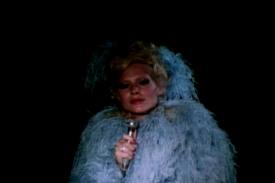
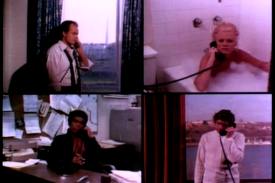
Girls Are For Loving Plot: Ginger McAllister is back (for the last time)! It’s now my sad (?) duty to examine the third and final chapter in the Ginger McAllister saga. Ms. McAllister was a, er, sexually progressive and occasionally psychopathic woman who took on cases for investigator Jason Varone (William Grunnell). She’s often described in reviews as being a ‘female James Bond,’ although that description doesn’t really comport with her first two adventures. In Ginger, she traveled to exotic Brighton, NJ to break up a small, if admittedly vicious, drug and prostitution ring. While there she reached catharsis on some of her preexisting emotional baggage by garroting off a bound man’s testes and shooting a black guy to death. Following these therapeutic acts, she lightened up, at least comparatively. Her second assignment saw her travel to the woodlands of North Carolina, or something like it, to investigate a white slavery ring. The main villain turned out to be the town banker. Ginger was comparatively sane this time around, however. Even a man who betrayed her sexually was merely mildly tortured rather than slain. As the above descriptions indicate, Ms. McAllister’s escapades to this point remain a bit prosaic for a Bond manqué, distaff or not. It was probably more her outsized sexual appetites that garnered such comparisons. However, this third chapter, sporting a somewhat higher budget than her prior films, definitely moves Our Heroine in that direction. She even is provided with a nemesis, sure sign of thematic growth. Unfortunately (well, maybe), as stated, this was the last appearance for Our Ginger. Cheri Caffaro, the actress who played her, married Don Schain, the writer/director of the series following this film. Perhaps the series faltered because he no longer wanted her flashing her goodies for drive-in yokels across the country. Another possibility is that the higher budget evident in this chapter may not have garnered commensurate box office success. Or maybe Ms. Caffaro had become bored with acting. Whatever. Anyhoo, the films stopped at a point in which they were either on the verge of getting kind of decent, or of conversely butting up against the Schain/Caffaro talent ceiling. In any case, now seems the time for someone to hitch a ride on the Quentin Tarantino ‘70s schlock revival movement by bringing the character back. I again nominate Elizabeth "Showgirls" Berkeley as a natural to assume the role. On the other hand, even if someone were interested in doing so, it remains possible that they would ultimately lack the guts to produce movies as unremittingly and cheerfully sleazy as these pictures were. Our film opens on some skydivers landing near a remote house set by a frozen lake. (At least in some shots. In others, numerous other houses are seen nearby.) To make sure we realize this isn’t a carefree moment, Ominous Music accompanies the image. Inside the abode, one of those triangular, teepee-esque jobbies popular in the ‘70s, a man is making out with a woman. I mean, it’s a Ginger McAllister movie, so what else? Just as things begin to get hot and heavy, the aforementioned skydiver burst in. Their leader is a big villainous black guy, sporting Blacula sideburns and Afro, who is obviously (and I mean obviously) a bit of a psycho. Waving a gun at them, he utters some dialog that instantly identifies this as a Ginger McAllister picture: "Get up off that couch and strip down!" This leads to our first topless shot, a minute into things. That’s actually a little slow for this series. A plane lands (supposedly) nearby. It’s in this shot that we see numerous houses in the background. The victims, now completely naked, are bound by their captors and dragged outside into the frigid, snowbound surroundings. The man is put into the plane and given a sedative; the hysterical naked woman is handcuffed to a tree. This sort of thing has been seen in the series before, as the films are very heavy on the bondage stuff. She isn’t left to freeze to death, however. Instead, Psycho Black Guy fondles her a little and then shoots her. You don’t exactly have to be Jesse Jackson to see some unsavory racial undertones here, another element prevalent throughout the films. As the plane takes off (why the skydivers didn’t just land in the plane isn’t explicated—presumably their means of arrival was just considered cool), the triangular house blows up. Why the villains would do this doesn’t make much sense, a fact actually confirmed in dialog later. But hey, you know, blowing stuff up is neat. A sign of a larger budget is that I don’t think the exploding building was a miniature. It most probably was just the frame of a house, but still. Cut to Ginger, standing before a mirror. She’s wearing lacy pink lingerie, and her hair is swept back from her forehead, which lends her a more sophisticated look. As she preens, a burly man silently enters the room and stalks towards her. This leads to a fight scene that goes from room to room. Again, it’s apparent that more effort was put into this chapter. While the fight choreography is still somewhat stiff and awkwardly performed, especially compared to the ludicrously overblown stuff seen today, it’s obvious that Caffaro had been taking lessons to make her kicks and martial art moves at least somewhat more professional looking. In the end, it turns out that the guy is a sparring partner, a revelation that inevitably calls to mind the scenes in which manservant Kato would ambush Inspector Clouseau in the Pink Panther movies. This is especially true when Ginger runs into another room and grabs up a pair of nun chucks just sitting on a fireplace mantel. In the end, the guy is knocked into Ginger’s recently exited bubble bath. At this point she gets a phone call from Jason. He informs her that the CIA wants her for a job. As the conversation continues, her, uh, friend, strips down, creeps up on her from behind and begins the, er, climatic part of their training regimen, if you know what I mean. It’s just a day in the life for Our Ginger. The script for this movie is hilariously convoluted. Jason, the series’ only recurring character other than Ginger, is given oddly short shrift. He only appears onscreen in a scene or two. To take his place, zillions of other characters are introduced. The plot, meanwhile, is an almost indecipherable mess involving a secret trade meeting between the U.S. and some unidentified Asian country. In the end, the villains are out to gain information that will allow them to buy stock in the companies that will benefit from the secret trade pact and reap huge profits. This is, needless to say, a rather prosaic motivation for an espionage movie. Admittedly, it’s therefore more realistic than some plot involving hijacking nuclear submarines or something. However, any sense of mundane reality their goals might have provided the film is completely undercut by the cartoonish mayhem with which they pursue it. The main baddie is Ronnie St. Clair, an obvious evil doppelganger for Ginger herself. Like our heroine, she’s a wealthy adventuress who engages in her antics for kicks. In her case, though, she does so for evil purposes rather than the general good. Her corruption is indicated by the fact that she only uses sex as a weapon rather than for her own pleasure. (Watching all this, it struck me that the Ginger series resembles in its ethos nothing so much as the perverse, sexually-obsessed novels of Robert A. Heinlein during the later, insane years of his life.) These views are explicated in a hilarious series of scenes in which she and Ginger, early in the game, engage in a debate about the use and purposes of sex. Ronnie only enjoys the power that her wiles give her over her partners. She savors the fact that they surrender themselves to her, while she holds herself back from them. "You keep your cool," she sneers, "and you lie there, and you let him spend himself while you’re in control. Then, when it’s over, he knows you had him, but he didn’t really have you." Ginger admits to having played this game as well, but needless to say, enjoys carnal activities too much to make a habit of holding herself so aloof. "You lie there, and give them everything," Our Heroine rejoins, "and they drive you right up the wall. Then it doesn’t really matter that they’ve got you. You’ll do any damn thing they want." In the end, Ginger explains, "After you’ve been loved, not just laid, what you feel like is a woman." This trenchant philosophical exchange takes place at a ski resort early on in things. Ginger is there, er, undercover as a lounge singer. Her act is a hoot, especially since Ms. Caffaro’s singing talents prove even more modest than her thespian abilities. She sings a song, appearing on stage in what appears to be a Yeti suit constructed from blue feather boas. After her first number is finished, the band starts playing stripper music; the yeti suit is removed, revealing a slinky dress. This also comes off, and in the end only some wee pasties shield the very naughtiest of her naughty bits from the audience. This brings up another topic I shouldn’t let go by. This film might well showcase even more frightful clothing then its predecessors, which is saying something. Ginger especially flaunts a continuing line of the most ludicrous hooker-wear imaginable.
At the risk of being unkind, I suspect that Jocelyne Peters, the actress who portrays Ronnie, was hired because she didn’t represent much of a threat to Caffaro in either the looks or acting department. In any case, this appears to have been Ms. Peters’ only film role. Her other meager credits include things like appearing as "Waitress" on an episode of Marcus Welby, M.D. The script is insanely complex, with scenes included with little sense of logic. Instead, the criteria seems purely on whether they’re cool or not. Quite a few guys get offed, one upon hitting a mine set on a tobogganing hill (!) at a ski resort. In another scene unlikely to appear in another character’s films, Ginger gets info from some bound henchmen by running electrical current through their testicles. (This scene takes place on the Virgin Islands, and with the assistance of the local police!) Upon being told that the process will eventually make them eunuchs, which remains in the ultimate dire fate in these films, the guys quickly start talking. As is often the case with these pictures, sometimes a scene probably sounded better on paper than it ends up in reality. Ronnie gets info from the man kidnapped in the beginning of the movie in a typically elaborate and sexually perverse fashion. He’s tied to the floor of a swimming pool, his head bobbing above the water. Wearing a slinky bikini, Ronnie offers the guy both his life and sex if he answers her questions, a bullet if he doesn’t. When he tells her what she wants to know, she jumps into the water, wades over to him, kisses him in a provocative way, wades back, climbs out, picks up her revolver and shoots him in the head. The death traps on Batman were more straightforward than this. In the end, the plot abandons any pretense at being serious. After all the murderous skullduggery, the senior American trade representative brings his hot young daughter (who, amazingly, is not once seen naked or even topless) along on the trip. Of course, Ronnie ends up kidnapping the lass. For Ginger, meanwhile, things have become personal after Ronnie humiliates her sexually by defying her to resist enjoying some forced sex. Needless to say, this is one test Our Hot To Trot Heroine fails. Eventually, things wrap up at a big party the egomaniacal Ronnie throws to demonstrate her complete mastery of the situation. The trade representative is in attendance. After nervously asking about his still imprisoned daughter, he quickly assumes a happy smile, hooks his arm through Ronnie’s and head over to the buffet spread. (!!) "Delicious!" he happily asserts upon enjoying the wares. Hilariously, Ronnie has the representative’s daughter in the house during this celebratory party, and she’s moreover guarded only by the Psycho Black Guy. One of Ginger’s compatriots takes him out after a fairly good fight scene (per scriptwriting rules, each of Ginger’s allies is given an analogue to personally defeat), and Ronnie’s plans are foiled. Well, that was convenient. Oddly, the film eventually wimps out on some sexual issues, of all things. First, Ginger turns the tables on Ronnie (surprise), by binding her and having her subjected to sex that even Our Villainess will be unable to authentically enjoy. At first I assumed Ginger herself would provide these ministrations; you know, for a more personal victory. Instead, she turns things over to one of her lovers. Lesbianism is thus restricted to scene in the first movie, although Ronnie and Ginger do take turns having stripping each other so as to assert their mastery over the other. As Ginger sadistically has Ronnie introduced to Real Sex before sending her off to a lonely life in jail, she notes, "I want her to spend the next twenty years wanting it again. You see, Ronnie, girls are for loving." (Wow! She said the title!) Finally, one of the various heroes here is a strapping black man, presumably as a counterweight to the parade of depraved blacks the three films have provided. Needless to say, Ginger ends up in this guy’s arms, as she does in about everyone else’s, too. However, we never actually see them doing anything, which in this series is downright amazing. Giving the increased care taken with this entry, I can only imagine that Schain and Caffaro meant to continue the series. The fact that Ronnie is merely (presumably) headed for prison rather than killed at the end of things indicates that she was being kept around for a return appearance. Whatever the reason, though, the Ginger series ended here, and Caffaro soon abandoned acting altogether. For those wondering what these films are really like, here are the highlights:
Summary: Goodbye, Ginger, we’ll never forget how weird and slutty you were. ______________
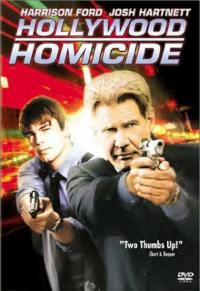
Hollywood Homicide Plot: A veteran detective and his hunky young partner seek to unravel a convoluted murder case. You know all those big-budget movies that are not really good or particularly bad, but are really annoying for how mediocre they are? For a change of pace, let’s look at one of those. Since I just saw Hollywood Homicide on DVD, and since it exhibits many traits of by-the-numbers studio filmmaking at its most obnoxious, we’ll go with that one. There’s something intrinsically sad in seeing entertainers whose work we once enjoyed, be they writers, filmmakers or singers, lose their powers as they grow older. Some, of course, don’t. Their craft grows steadier and sharper as they age. Even if every work they turn out isn’t a masterpiece, each has a reasonable chance of being so. I’d toss Clint Eastwood and Johnny Cash into that category. However, more often such people lose their way as time passes. Perhaps this is one reasonable demarcation between an artist and an entertainer. Entertainers, one might argue, are more purely artifacts of their age, and thus have trouble surviving cultural shifts. These depressing thoughts swirled in my head as I watched the desultory Hollywood Homicide. The film stinks of career desperation. Writer/director Ron Shelton once made films that were both financially and critically successful. These generally were sports-themed movies, such as Tin Cup and White Man Can’t Jump. His most memorable film remains Bull Durham, although I personally would argue that it hasn’t aged particularly well. Shelton’s career has taken a severe downward slide since the modestly successful Tin Cup, however, and that was made back in 1996. Three years after that film was released, Shelton followed it up with Playing It to the Bone, a boxing comedy starring Woody Harrelson and Antonio Banderas that probably they themselves don’t remember. Shelton next attempted a comeback with 2002’s cop noir flick Dark Blue. He and star Kurt Russell obviously poured their hearts into the movie, but it doesn’t quite work. The hoped-to-be-trenchant observations on racial conflict emphasized by setting the film during the Rodney King trial never jell, and instead seem somewhat forced. It’s not a bad movie, but it’s not as good as the recent Narc, and is easily outstripped by gritty TV cop shows like The Shield. Shelton wasn’t the only one with career problems. Harrison Ford was facing the typical problems of the aging action star. Although he can actually act, his recent dramatic (The Devil’s Own, Random Hearts) and romantic (Sabrina, Six Days Seven Nights) offerings have not found audiences. His last successful movie was 2000’s What Lies Beneath, and that probably did well more because of a vogue for high-end horror pictures than on account of his or costar Michele Pfeiffer’s presence. More ominous was the nearly complete failure of his submarine adventure epic K-19: The Widowmaker. Notably, it was following that box office debacle that Ford began pushing the idea of a (presumably foolproof) fourth Indiana Jones movie with rather more enthusiasm. Hollywood Homicide, clearly, represented a shot at a career retrenchment for the two. One doubts either had much personally invested as filmmakers in the project. Instead, it was meant to be a safe bet, a buddy cop film (a genre that, like Shelton and Ford themselves, saw its greatest success in the ‘80s) that would act as a slam dunk financial success, buying them both a little career insurance. The idea seems good on paper. Shelton has a track record with buddy movies, including White Men Can’t Jump and Bull Durham. Ford was still a talented actor, and as insurance the format allowed for a younger star to be teamed up with him. All the elements seemed properly balanced. Shelton would provide one of his witty screenplays. Ford would draw the older audiences (including those who made buddy action movies popular back in the day), and Hot Young Thesp Josh Hartnett would bring in the kids. In the end, however, ticket buyers went elsewhere. One can’t argue with them, either, as the film is a truly uninspired piece of work. The end product is fully as lifeless and cynical as the reasons that presumably brought it into being. Shelton shoehorns in some of his trademark motifs, but his script is frankly hideously bad and his direction is torpid. Ford predictably provides his cranky veteran cop part with a professional sheen, but doesn’t seem that engaged in the role. (Frankly, I don't really blame him.) Hartnett, meanwhile, is a complete non-entity as the sidekick. One indication of my advancing years is that I can’t really tell all these pretty boy youngsters apart. However, I have no doubt that you could replace Hartnett with the lead actor of any WB of Fox teen show without anyone noticing. Even so, it’s not really my intention to beat on Hartnett here. Or not too much, anyway. His part as written is fully as lame as the rest of the movie. If the veteran Ford can’t do much with his character, it’s not that surprising that a callow youth such as Hartnett ends up in far more trouble. In the end, the thing’s just a botch job. The script is embarrassing. For instance, there’s the rote ‘comical’ personality traits assigned (and believe me, that’s the proper word) to veteran cop Ford and his hunky young partner. Ford is a crack shot, Hartnett can barely hit the target. Ford eats cheeseburgers, Hartnett eats health food. I think that last ‘zany’ difference about sums up the movie in itself. Moreover, each is given a purportedly humor-inspiring side job, which is meant to provide characterization but which instead is largely responsible for the film’s severely bloated two-hour running time. Ford, a real estate agent in his part time, needs a big sale to salvage his finances. Hartnett, meanwhile, teaches yoga to classes full of sexually available hot chicks, but really, truly wants to be an actor. This is all tiresome stuff. When a case brings them to a big movie producer (Martin Landau doing, I think, Robert Evans), Ford tries to get permission to sell the guy’s house while Hartnett tries to slip him a script. This is just dreary stuff. And while it’s somewhat charming that Shelton apparently thinks someone like Landau represents an audience-pleasing guest star, it’s another indication of how out of date his tastes are. The sloppiest, more obnoxious element of the script is the gross number of downright ludicrous coincidences used to keep the plot going. On the opening crime scene, Hartnett is the only one to notice a big-ass earring lying on the floor by a corpse. This is used to establish that he’s a promising homicide cop, although the scene would have the investigators from CSI spitting milk out of their noses. Hartnett later ends up at an unrelated autopsy (which makes him nauseous—Komedy!), and stumbles across a matching earring that ties another case in with theirs. That’s bad enough right there, but they keep coming. Ford is being hounded by an Internal Affairs cop with a long-standing grudge against him. However, it turns out that this same guy is also already illicitly in the pay of the very bad guys behind the killings the two are attempting to solve! What are the odds?! Ford begins an affair with a hot radio psychic. After sleeping with her, he learns to his chagrin that she has just broken up with the same crooked IA investigator who already had a previous grudge against him and who is also currently being paid by the bad guys to foil Ford’s investigation, and moreover the guy’s insanely jealous, so now he’s really really really after Ford’s ass! Ha! Meanwhile, Hartnett reveals his Secret Pain. His dad was a Good Cop who died under suspicious circumstances. The case file detailing the shooting is restricted. Of course, this is a movie, so Ford just pulls some strings and provides Hartnett with a copy of the file. It turns out that his dad was probably killed by his patrol partner, a crooked cop who is currently—are you ready?—the guy behind the very murders the two are now investigating and also the one paying the IA investigator to bring Ford down. Got that? Disney was right, it is a small world after all. Oh, and as the film reaches the point where its time to get to the climax, the psychic girlfriend offers the skeptical Ford her help. She takes him and Hartnett to a spot in Beverly Hills. She then goes shopping, while the two cops wait outside, with Ford ‘comically’ grousing. Whereupon, sure enough, the two head bad guys drive right up to a nearby streetlight. Somebody, just shoot me. This sets up a supposedly epic but wearingly series of chase scenes that end up lasting a full 40 minutes. This goes from car chase to foot chase (watching the aged Ford supposedly keep up at length to a lean, fit man thirty years his junior is an eye-rolling experience) to an incredibly misfired bit where Ford commandeers a little girl’s pink bicycle. It’s supposed to be funny, you see, because it’s Harrison Ford riding a little girl’s pink bicycle. My sides. There’s also a bit during the car chase—and watch out, SPOILER ALERT—where our heroes find themselves driving the wrong way against traffic, and thus find themselves weaving through a series of honking cars and near miss collisions. What a brilliant idea! There’s little reason for anyone to really like this film. The characters are boring, and the actors ill-used. Harrison Ford shines best when playing a smartass. Here, oddly, he’s cast as a nearly burned-out detective who is acts tired and grumpy throughout most of the film. As for Hartnett, again, he was so lightweight I wasn’t sure how he kept from floating out of shot. The investigation stuff, which should be the heart of the movie, is generally uninspired. The comic scenes, meanwhile, are often downright painful. This is usually because they aren’t grounded in reality. There’s a scene where the two are brought in for questioning by IA detectives. Ford’s nemesis watches both interviews through two-way glass walls. The ‘joke’ is that the IA cops are unable to control the interviews. Ford keeps getting calls on his cell phone, a situation that is obviously meant to provoke much audience hilarity. Of course, his questioner doesn’t bother to just take the phone away from him. Hartnett, meanwhile, keeps quiet and assumes elaborate yoga poses. His female interrogator finds herself lustfully commenting on his flexibility, then asks for his help with her bad back. Meanwhile, of course, their frustrated boss is going nuts, ho ho. This is so dumb that the idea that two detectives would be questioned in the first place without union representatives on hand doesn’t even factor into things. Shelton tries to bring some of his trademark themes into things, but either he’s just out of gas or doesn’t want to waste his A-material on this project. Ford’s lover, with her batty ideas and belief in her psychic powers, is basically a reworking of the hot-but-exasperating Susan Sarandon character from Bull Durham. I will give Shelton credit for his all-too rare impulse to find romance between adults more interesting than the usual youth stuff we get in most films. Hence the film’s major sex scene, although not nearly as hot as the Costner/Sarandon one in Bull Durham (Ford may not have wanted to take things that far), takes place between the older actor and the *gasp* nearly fifty year-old Lena Olin. Oh, I almost forgot about another of the Hartnett character’s hilarious personality traits. See, he has sex with a lot of women, we’re informed. So many, it turns out, that when he comes across one of them he always gets their names wrong. Ha, ha. This always rankles the women, but they don’t call him on it because he’s so hot. Or something. There’s another ‘funny’ bit where IA detectives search his and Ford’s departmental lockers. Ford is unconcerned, but Hartnett freaks out. It turns out that there’s nothing incriminating in there, it’s just that he’s embarrassed about the collection of tartaric sex books he keeps in there. This typically misfires as comedy because, first, it’s not that funny to start with, second, because the hippy-ish Hartnett doesn’t seem the type who would be embarrassed to be found with tartaric sex books, and third, because if he is embarrassed of them, it makes no sense that he’s keep them in his police locker. In the end, the saddest thing is the knowledge that Harrison Ford only has so many films left in him. Let’s hope he picks better ones than this in the future. Summary: Sitting astride the tepid middle of the cinematic bell curve. ______________
The Mad Monster
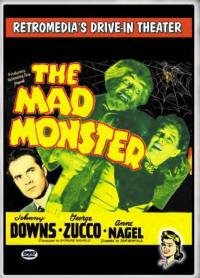
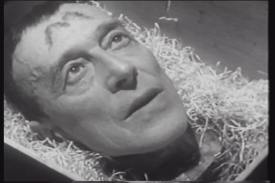
If you’re looking for a film emblematic of the shoestring horror fare put out by Hollywood’s "Poverty Row" studios (PRC, Monogram and Republic) in the ‘40s, this should do you. It has all the necessary requirements, including a loony script that recalls a half dozen similar pictures made by the same studio, plot elements stolen from bigger studio productions, threadbare production values, and a ‘name’ horror star. The Mad Monster was one of twenty films (!) churned out in 1942 alone by PRC house director Sam Newfield. Mr. Newfield, amazingly enough, directed between 1926 and 1958 a mind-boggling 267 movies. Needless to say, he seldom worried about injecting artistic notes into his product. Mr. Newfield also happened to have been the brother of the company’s president, Mr. Sigmund Neufeld. Our subject here is, as noted, pretty standard stuff. The plot is the studio’s seemingly eight hundredth variation on 1940’s The Devil Bat, which stands as perhaps Bela Lugosi’s most fondly remembered Poverty Row cheapie. Lugosi, along with an occasionally slumming Boris Karloff, remained the biggest fish in the Poverty Row horror pond, followed by John Carradine, Lionel Atwill and then George Zucco. For Lugosi, these pictures marked the degradation of his career. They kept him working, but the fees were small and Lugosi chaffed at the trash he was required to appear in. (Especially given the far more respectable films his rival Karloff was yet starring in.) Still, in these studios he was still treated as a big star, which acted as a salve to the actor’s sizable ego. For Atwill and Zucco, meanwhile, the Poverty Row pictures represented something else altogether. The two were busy actors, and they continued to steadily garner small roles in major studio productions. However, it was PRC and Monogram that gave them the top billing they naturally craved. They may have yet languished in the shadow of even a diminished Lugosi, but they still were appearing in films built around their names. It is Mr. Zucco, an erudite Englishman with the requisite talent for outlandish leering and eye-popping malevolence that assumes the obligatory mad scientist role here. He also starred in 1946’s The Flying Serpent, an even ranker retread of PRC’s endlessly recycled Devil Bat plotline. Yet if The Mad Monster isn’t quite as naked a Devil Bat knock-off as The Flying Serpent, the resemblance remains pretty obvious. Zucco plays Lorenzo (oh, oh – a foreign sounding Christian name!) Cameron. He’s a pretty standard mad scientist, who naturally is primarily motivated to gain vengeance against the more respectable scientists who have mocked him in the past. Probably the film’s best sequence—which ain’t saying much—occurs early on, features Cameron ranting at the ghostly images of the four men he feels destroyed his professional credibility.
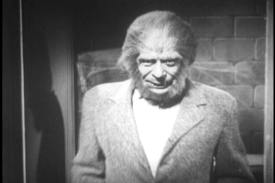
Cameron own Mad Experiment is similarly run of the mill. He joins a long line of MS’s who seek to create human/animal hybrids. His method is to inject a serum based on wolf blood into his dimwitted gentle giant of a handyman, Petro (Glenn Strange.) This results in a ‘wolf man,’ although actually Strange is merely outfitted with a predictably fake-looking wig, heavy whiskers and eye brows, and some rather unconvincing fangs. All in all, he looks more a lighter-haired version of Bela Lugosi in The Ape Man than Larry Talbot’s hirsute alter ego. Toss in the denim overalls he generally prowls around in (although he dons a sports jacket for his final rampage), and he basically just comes across like a big, shaggy hillbilly. Hmm, this would probably make a good double bill, then, with Teenage Monster. To the extent that anything involving Teenage Monster can be ‘good.’ Cameron, meanwhile, is given the standard, highly accurate scientific soliloquies: "I’ve discovered that certainly extremely volatile elements in the blood are little more than particles of electrical energy, and the source of all physical growth and mentality. By exciting the various glands and brain cells, I’ve learned how to extract and concentrate these elements from the blood of various animals. I can control evolution! I’ve discovered the source of life!! Having decided to rip-off Universal’s massively successful The Wolf Man, the film proceeds to further ransack the works of actor Lon Chaney, Jr. Petro is rather blatantly modeled on the slow-witted, generally gentle but dangerously powerful Lenny from 1939’s Of Mice and Men. With his already manly chest and shoulders further enhanced with padding, Petro innocently tends to the ‘pretty things’ he loves, including his garden and Cameron’s Obligatory Beautiful Daughter, Lenora. Finally, Cameron occasionally threatens his animal-man with a bullwhip, ala Charles Laughton in Island of Lost Souls. Of course, Petro has little idea of his murderous activities while under the influence of Cameron’s serum. He retains only vague memories, which he believes to be bad dreams. Still, after his bestial self kills a cute little six year-old girl (which admittedly surprised me, even if her death occurs offscreen), you know Petro will have to come to a bad end himself. Interestingly (to a few of us, at least), the relationship between Cameron and Petro is quite similar to the one in I Was A Teenage Werewolf, in which mad scientist Whit Bissell chemically triggers a nearly identical transformation in a troubled teenage patient of his, played by Michael Landon. In both cases, a troubled innocent is preyed upon by someone who should be seeing to their welfare. Cameron immediately sets about using Petro as his instrument of revenge against his perceived tormenters. In The Devil Bat and The Flying Serpent, the monsters came conveniently equipped with a mechanism that allowed their respective employers to set them upon chosen victims from afar. Wolf Petro lacks such a thing, however. As a result, the situations wherein Cameron sets up his victims are rather more contrived. In a bit that goes nowhere, other than allowing them to stretch out the running time to a rather ponderous 75 minutes, Petro begins transforming without the injections. Well, OK, that happens once, in the middle of the film, and doesn’t really come into play again. Still, if it’s good enough for Mr. Hyde, it’s good enough for Petro, I guess. The characters here are pretty much standard issue. Aside from the Mad Scientist, his series of designated victims, and the monster, we’ve got Lenora, the Scientist’s Daughter, who against her will comes to suspect her father of rash doings as the film progresses—yeah, you’d think, its not like Zucco is known for his poker face—and also is on hand as the Obligatory Female Romantic Lead. Needless to say, a Female Romantic Lead requires a Male counterpoint (in this era, anyway), and that role is filled by the generically-monikered Tom Gregory. Tom’s a reporter, as he’d almost have to be. For some reason these Poverty Row movies nearly always made either the male or female lead a wise-cracking, Front Page-esque newshawk, rather than a cop or scientist or whatever. Nor were their journalistic ethics usually very polished. Tom isn’t as bad as the reporter hero of Devil Bat, who at one point fakes photos of the titular menace to run over his sensationalistic prose, but he’s no Ed Murrow, either. Hearing of the young girl’s death, for instance, he plans to advance in print his theory that the death was caused by some sort of swamp dinosaur. Only when a scientist friend (one of Cameron’s eventual victims) scoffs at the notion does he decide against writing it up. Things go about as you’d expect from here. Cameron’s enemies die one by one. Everyone suspects Cameron, but he arranges (usually under laughably implausible circumstances) for an alibi during each killing. Petro becomes further troubled by his ‘dreams.’ Lenora become increasingly suspicious of her father, and Tom seeks a solution. In the end, Cameron is ironically killed by his own murderous creation. Oops! Sorry, I forgot to write ‘spoiler alert’ before that last bit. Hope I didn’t ruin the ending for everybody. With war on the horizon at the time this was made, Cameron is given a pretty amusing justification for his experiments. (Other, that is, than his being a revenge-crazy mad scientist.) No, indeed, he intends to offer his serum to the U.S. Military, so that WWII can be fought with an invincible army of blood-thirty wolf men. (!!) This scheme is so unworkable that even Cameron’s mentally-projected ghost critics pick it apart. "How would you control these wolf men?" one perspicuous phantom inquires. As noted, Petro is played by the beefy cowboy actor/stuntman Glenn Strange. Mr. Strange went on to more lasting fame by playing the Frankenstein Monster in the latter Universals, including House of Frankenstein, House of Dracula and Abbott and Costello Meet Frankenstein. Anne Nagel, the actress who played Lenora, also appeared in some Universals. These included The Invisible Woman and The Mad Monster is available on DVD from Retromedia. The presentation is fairly poor. The film is watchable, but there’s a lot of snow and visual defects, including film skips, and the soundtrack at times becomes indiscernible. Even so, it’s probably as good as you’re likely to get for a low-grade flick like this, and the disc does includes an entire second film as a bonus feature. This is The Black Raven, an Old Dark House murder drama also starring Zucco and Strange. Another interesting extra is a ten-minute long and quite homey audio interview of Glenn Strange conducted by writer/director Don Glut.
Summary: Fans of creaky fare will be satisfied. ______________
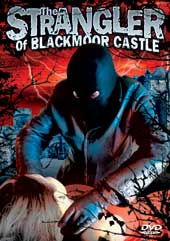
The Strangler of Blackmoor Castle Plot: A masked killer seeks a fortune in diamonds. Another of the multitude of West Germany’s "krimi" films of the ‘60s, The Strangler of Blackmoor Castle isn’t quite as gonzo as other such Edgar Wallace-inspired pictures like The Mysterious Magician or The Mad Executioners. Admittedly, that may sound an odd comment for a film featuring a ski-masked strangler, death traps, onscreen decapitations, initials carved into the foreheads of dead victims, severed heads sent to prospective victims in the mail, people of larcenous intent who appear in multiple disguises, secret panels and rickety catacombs. Lucius Clark is holding a dinner party in Blackmoor Castle, his rented abode. He announces that the following spring he will finally achieve his life’s ambition, which is to be knighted by the Queen. (Like all of these films, this one is set in England. The American dubbed versions, however, usually assign the characters neutral American accents, so that you end up with German actors playing English characters sporting American voices.) Outside, two dogs in their kennels are ferociously barking. The groundskeeper, makes to check things out, only to end up strangled to death by a mysterious figure wearing a leather jacket and ski mask. Then, after the guests have left, the killer enters the house. He confronts Clark, accusing him of having once killed a man named Charles Manning in order to procure a fortune in diamonds. The Strangler promises to murder Clark if he doesn’t surrender the gems. Clark stays cool, however, noting that should the Strangler kill him, he’ll never learn where the diamonds are. The Strangler warns that he’ll make Clark’s life a living hell until he gets what he wants. (No kidding. He already faces the hassle of hiring a new groundskeeper.) At this point a car drives up outside and the killer takes his leave. Meanwhile, we meet some of the myriad characters the film throws at us. There’s Anthony, the Sinister Butler. We know he’s sinister because he’s always lurking behind curtains and popping his eyes out and sweating and exhibiting extremely malevolent facial expressions. A young Klaus Kinski often appeared in these films, and he certainly would have gotten this role were he in this one. Next there’s Lord Blackmoor, the impoverished owner of the castle. Due to his financial straits, he’s rented the bulk of the abode to Clark, while he himself stays in one of the castle’s towers. He’s obviously a comic relief character, because he has a very silly mustache, wears a kilt and is a bird watcher. This presumably means he’s Scottish, but they don’t even bother to assign him an appropriate accent. Clark’s niece is the beauteous Claridge Dorsett, as played by Karin Dor. Ms. Dor starred in dozens of these flicks, and also appeared as a Bond Girl in You Only Live Twice. Claridge is a reporter, although that doesn’t really come into things much. Needless to say, she’s mostly around to be menaced and to act as a romantic lead. Then there’s Flip, a plucky lad normally attending to Lord Blackmoor. It’s Flip who finds the body of the groundskeeper, now sporting a letter ‘M’ carved into its forehead. This brings Inspector Mitchell of Scotland Yard on the case. That’s just the beginning. There’s a crooked lawyer (crookeder than usual, I mean), a sidekick cop for Mitchell, a reporter colleague of Claridge’s, a gangster through whom Clark fences his diamonds, the woman who works at the bar owned by the hoodlum, the hoodlum’s various henchmen, and more besides. All, of course, are possible suspects to be the Strangler.
Everyone wants the diamonds. Clark sends shipments of the diamonds to the gangster in boxes of fine cigars. When the strangler kills Clark’s gardener to hijack a shipment, the hoodlum suspects that Clark is double crossing him. Afterward, Clark receives the gardener’s head in the post. This noggin also sports an ‘M’ carved into the forehead. For a rather packed eight-odd minutes, we watch a plethora of suspicious acts and various incidents mayhem. Clark has to sell some of the diamonds to cover funds he removed from Claridge’s inheritance fund. (I especially like the way he keeps sending the gems out in cigar boxes, even after the Strangler has intercepted one such package.) You can’t beat his secret hiding place, though. They’re kept behind the raging flames of an industrial-sized, constantly lit furnace. (!) To get to them requires an asbestos fire suit he’s got tucked away. Clark’s disposing of the treasure especially dismays the extravagantly loony Anthony, who turns out to be an ex-con/diamond cutter. He’s been hired by Clark to transform the supply of rough diamonds into perfectly cut stones. At that point, however, Anthony exhibits a Gollum-like obsession to keep the fruits of his labors. His solution is to kill Claridge, a plan he several times tries to implement over Clark’s angry opposition. Anthony is a little too obvious a suspect to be the Strangler, but in this kind of movie it could be anyone. On occasion even the cop heroes in these things turn out to be the villains. However, after we learn that the killer has only nine fingers, that narrows things down to the two or three characters always seen wearing gloves. In this particular case the Strangler’s identity isn’t difficult to figure out, although that doesn’t really diminish the film’s appeal much. Highlights include the Strangler attempting to kill (I think) Claridge by stringing a wire across a covered bridge she’s due to drive across in her convertible. Instead, one of the gangster’s henchman, riding a motorcycle, gets kacked. This is a pretty great scene, featuring a stuntman who’s quite obviously pulling his jacket over his head and balancing a prop substitute atop his crown for the decapitation scene. His head too ends up being marked with the Strangler’s trademark ‘M.’ In the end, the Strangler sort of runs out of ideas. Ambushing Inspector Mitchell on the same bridge later on, he merely tries to shoot up his car with a submachine gun. (In these movies, everyone in Britain carries guns, including the cops.) If I’m not mistaken, the gun is a Schmeiser, which is pretty funny. You’d think for a film purportedly set in England they could have dug up a British weapon. Unless it’s actually a Sten I’m unfamiliar with, in which case the joke’s on me. There’s too much going on here, and too many people, to really worry about the plot. This is good, actually, because the scripting isn’t exactly airtight. My favorite example of lazy writing occurs when the cops stake out the grave of Clark’s one-time lover. When Claridge appears to drop off some flowers, they follow her so as to ask a question or two. The moment they are out of sight, however, another woman visiting the grave is attacked by the Strangler. (By the way, masked lurkers are much less imposing in daylight.) They return just before she dies, and this character who we’ve never seen before spits out a couple of vital clues before passing on. Wow, good thing their lazy police work and gross incompetence didn’t cost them these freebie pointers. Another point of note is the bizarre proto-techno score by Oskar Sala, apparently constructed from left over notes and electronic sound effects from the soundtrack for Forbidden Planet. If you ever wondered what the world would be like if movies were scored by Germanic robots, this will provide an answer. Especially weird is the attempt at comedy music. It was actually disconcerting. The film is available, I’m pleased to say, on DVD from Alpha. Alpha is a company generating a lot of buzz from buffs, for releasing zillions of obscure movies on DVDs that cost about five bucks a pop. As you’d expect, the condition of the films is seldom better than watchable, and sometimes not that good. In some cases they’re reputably awful. A lot of time their discs seem to have been mastered from severely cropped 16 mm TV prints, as with their Gammera The Invincible release. In this case, the presentation is pretty decent, certainly worth the fiver the disc cost me. Other than that, it’s really a case-by-case kind of deal. Some of the films in their catalog, it should be noted, are available on far finer (and more expensive) DVDs by companies like Image. However, if you view these as the equivalent of gray market tapes from companies like Sinister Cinema, then you’ll probably be fairly satisfied, especially given the low price. I’m quite excited to see them start releasing these Edgar Wallace movies, and I hope a lot more are coming. I wouldn’t be surprised if that were so, moreover, since Alpha seems to put out dozens of new titles every month. Those interested can order Alpha DVDs here. Again, buyer beware in terms of quality, and you’ll be better off if you don’t expect too much. Extras, needless to say, are generally non-existent. On the other hand, they have some of the best DVD cover art in the business, for what that’s worth.
Summary: Goofy, gothic fun. -by Ken Begg |